
INTRODUCTION
This page looks at the occupational backgrounds of national leaders, including a breakdown by continent and type of regime (authoritarian and democratic). The occupational backgrounds of leaders is influenced by the political system and political culture of a country but also the history and overall culture of the country.
Charts
1. Occupational Background of National Leaders
2. Occupational Background of National Leaders by Continent
3. Occupational Background of National Leaders by Type of Regime
4. Popularity in the UK of Selected Leaders
Data Table
5. World Leaders Occupational Background, Position and Country
World leaders come from a variety of occupational backgrounds. It varies by region of the world, political system and political ideology.
Lawyer is the most common occupational background by far. This is particularly true of western Europe but it’s true across the world. The legislature is core part of the government of most countries and leaders tend to be legislators first. And as leaders, they are expected to work with the national legislature to develop and change laws. As such, a legal background is seen as the standard route to political office in much of the world.
Many leaders come from military backgrounds and are often seen wearing military uniforms. The military is the prime instrument of state power so it’s unsurprising that military leaders are often national leaders. This is especially true of developing countries, particularly those in Africa. Nigeria’s President, Muhammadu Buhari, is a retired General.
Certain national leaders have unconventional occupational backgrounds. A notable example of this is the Ukrainian leader Volodymyr Zelensky who was a comedian. Celebrated sporting heroes often become national leaders too. A notable example of this is Imran Khan, Pakistan’s World cup winning cricketer who became the country’s President.
Many leaders come from Economics backgrounds reflecting the central importance of economic management in politics. This is especially the case in eastern Europe. The leader of Poland, Mateusz Morawiecki, was an economics lecturer.
Business backgrounds are quite common too. The leader of the United States, Donald Trump, comes from a business background. He was primarily a real estate developer in Manhattan.
Certain professional occupations which aren’t directly linked to politics such as physicians and engineers are common among national leaders. Europe’s largest economy, Germany, is led by Angela Merkel who comes from an engineering background. Perhaps this reflects the strong culture in engineering in the country.
Ruling monarchies, which used to dominate the world, still exist including the oil rich country of Saudi Arabia and the neighboring gulf states.
A leader’s occupational background is often linked to their political ideology. Leaders from business backgrounds tend to be associated with small government pro-business political ideologies. A notable example is Donald Trump. His policies such as scaling back on regulations and tax cuts are seen as pro-business. On the other hand, Venezuela’s leader Nicolas Maduro who espouses a socialist ideology used to be a bus driver, a working class occupation.
This chart shows the occupational backgrounds of national leaders across different continents. It highlights how the professional paths that lead to political leadership vary significantly between regions.
Legal backgrounds are particularly common among European leaders, reflecting the strong tradition of law as a pathway into politics in many European democracies. Lawyers often move into public office through legislative or governmental roles, which helps explain their large presence in political leadership. Legal training is also fairly common among leaders in Africa and the Americas.
Military backgrounds are most prominent in Africa, where a large number of leaders previously served in the armed forces. This reflects the historical role of military institutions in politics in several African states, including periods of military rule or leaders who first came to prominence through military service.
Business backgrounds appear most frequently in the Americas, where several leaders previously worked in corporate management or entrepreneurship before entering politics.
Asia stands out for having the highest number of leaders who inherited their position as monarchs, reflecting the continued presence of hereditary monarchies in parts of the region. Overall, the chart illustrates how political leadership pathways differ depending on regional political traditions and institutions.
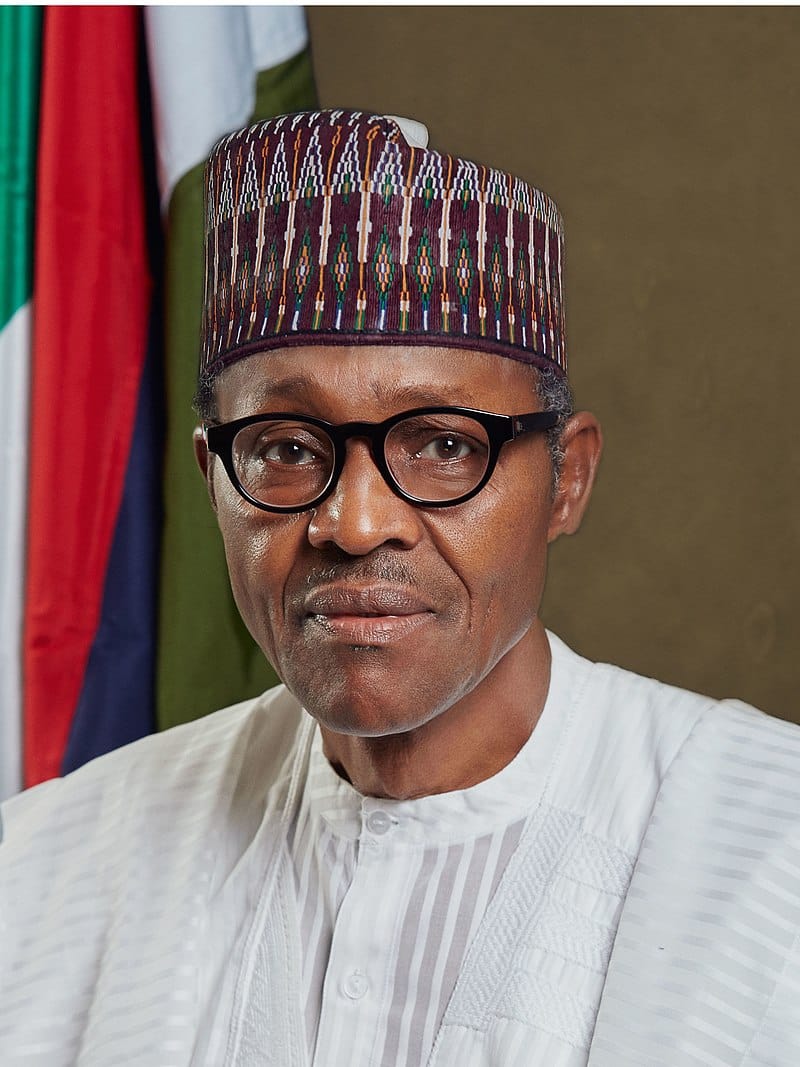
Photo by Bayo Omoboriowo
Licensed under CC BY-SA 4.0
Nigerian President Muhammadu Buhari comes from an military background. He is a retired Major General of the Nigerian Army and served as military head of state from 1983 to 1985, after taking power in a military coup d’état. His military career spanned from 1961 to 1985 and he served in the Nigerian civil war
This chart compares the occupational backgrounds of national leaders in democracies and authoritarian regimes. The results highlight clear differences in the types of careers that most commonly lead to leadership in these two political systems.
In democracies, legal and business backgrounds are particularly common. Many democratic leaders previously worked as lawyers, legislators, or in other legal professions, reflecting the importance of constitutional law, parliamentary politics, and electoral systems in democratic governance. Business management is also relatively prominent, especially in countries where political candidates often come from private sector careers before entering politics.
In authoritarian regimes, military backgrounds are much more common. A large number of authoritarian leaders previously served as military officers or came to power through military influence or coups. This reflects the central role that armed forces often play in maintaining or establishing authoritarian rule.
Inherited leadership, represented by monarchs, also appears almost exclusively within non-democratic systems. Overall, the chart shows that democratic systems tend to produce leaders from legal and civilian professional backgrounds, while authoritarian systems more frequently elevate leaders with military or hereditary authority.
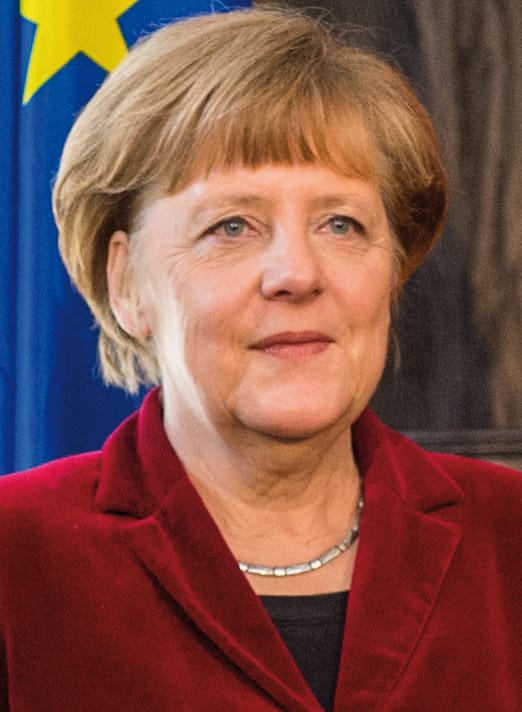
Photo by Marc Müller
Licensed under CC BY 3.0
German Chancellor Angela Merkel comes from a scientific background. She studied physics at the Karl Marx University in Leipzig, East Germany and worked at Central Institute for Physical Chemistry of the Academy of Sciences in Berlin-Adlershof in from 1978 to 1990. Her political career began soon after the fall of the Berlin Wall.
This chart shows the popularity of several world leaders among the British public, comparing the percentage of respondents who say they like or dislike each figure. Overall, the results suggest that leaders of Western democracies tend to receive more favourable ratings in the UK than leaders of authoritarian states.
Among the leaders shown, U.S. President Joe Biden has the highest approval rating, with more people saying they like him than dislike him. France’s Emmanuel Macron also receives a relatively positive balance of opinion, with favourable views exceeding unfavourable ones. India’s Narendra Modi also has a net positive rating, though a smaller share of respondents express an opinion compared with some other leaders.
By contrast, Vladimir Putin has by far the highest level of dislike among the British public, reflecting tensions between the UK and Russia, particularly following Russia’s invasion of Ukraine. China’s Xi Jinping and UK Prime Minister Rishi Sunak also have more negative than positive ratings, though the gap is smaller than in Putin’s case.
Overall, the chart highlights how geopolitical relationships and domestic politics shape public perceptions of international leaders in the United Kingdom.
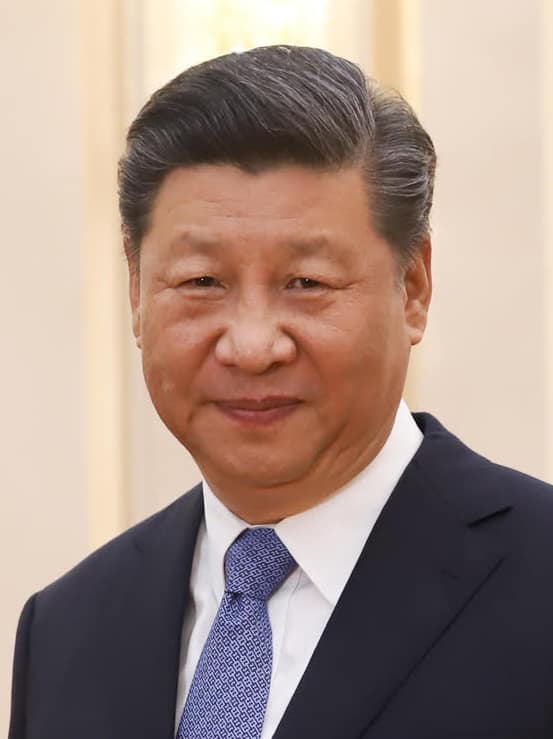
Photo by Palácio do Planalto
Licensed under CC BY 2.0
Chinese Premier Xi Jinping is a career politician although he studied engineering and law. His father was Xi Zhongxun, a prominent Chinese communist revolutionary. He studied chemical engineering at Tsinghua University. He was Governor of 2 coastal provinces, Fujian from 1999 to 2002 and Zhejiang from 2002 to 2007.
5. World Leaders Occupational Background, Position and Country
OTHER PAGES ABOUT POLITICS & WORLD AFFAIRS
Source