
INTRODUCTION
The 100 metre sprint is the most famous track and field event. It is the ultimate test of speed. The Olympic games is most prestigious event for track and field events including the 100 metre sprint.
Charts
1. Olympic 100m Gold Medal Times By Olympics
2. Medalists in 100 Metres at Olympics by Race/Ethnicity
3. Medalists in 100 Metres at Olympics by World Region
4. Participation in 2021 Tokyo Olympic 100m Heats by Region
Data Table
5. Finishing Time, Country and Racial Group of 100 Metre Olympic Medallists
As is expected, the finishing times for 100 metres in Olympics have become shorter over history, reflecting greater participation and improved training techniques as well as the motivation to break previously held records.
After the dramatic drop from the first to second Olympics, the improvement has been more gradual. In the 1930s, black American sprinters like Jesse Owens, Eddie Tolan and Ralph Metcalfe took sprinting to a new level. The 1948 Olympics seen strong sprinting times as well. The 1950s showed a decline in sprinting which was reversed from the 1960s onwards.
The first gold medalist to run under 10 seconds was Jim Hines in 1968 during that record breaking Olympics in Mexico City. There was a notable slowing down in 1980 due in part to the boycott of the Moscow Olympics by American athletes. From 1988 to the most recent Olympics in 2016, all gold medalists ran under 10 seconds and all medalists from 2004 to 2016 had final times under 10 seconds. The last 3 gold medals have been won by the Jamaican Usain Bolt whose times in 2008 and 2012 were particularly notable.
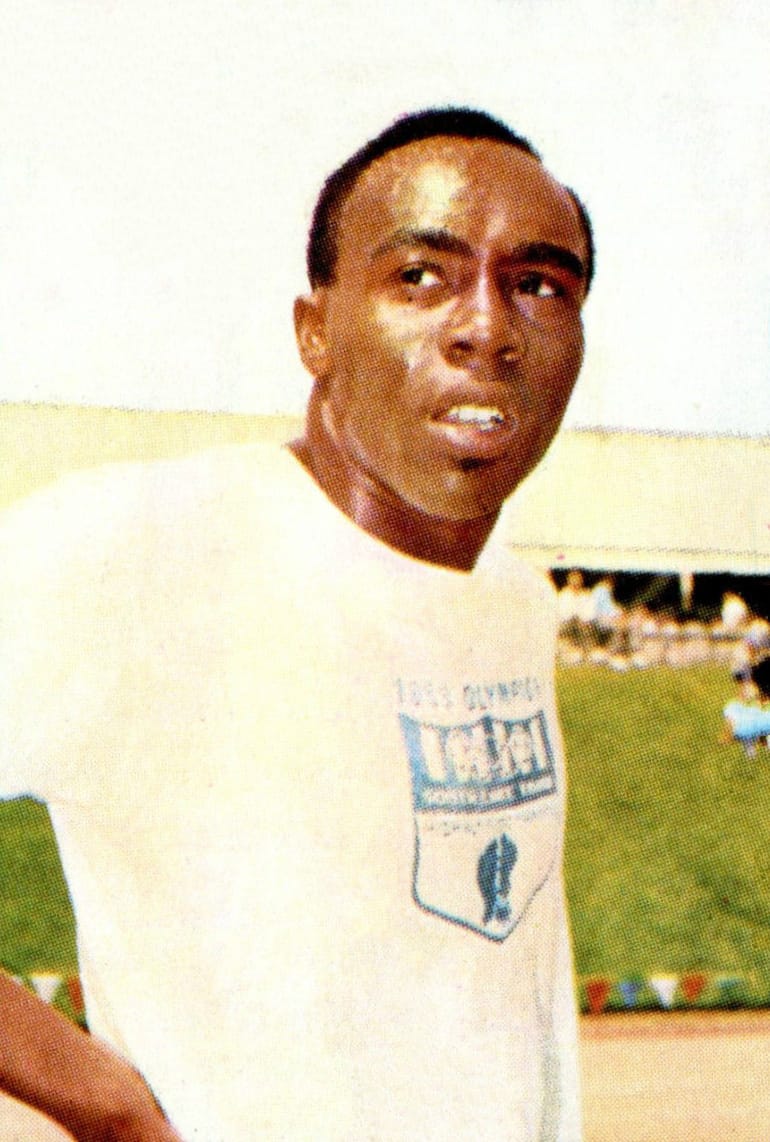
Jim Hines became first to run the Olympic 100m under 10 seconds in 1968 in Mexico City.
In the early part of Olympic history, prior to the 1930s, the 100 metre sprint was dominated by white sprinters. The first non-white person to win a medal was Harry Edwards, of mixed race (half German & half Guyanese), who won a bronze medal in 1920. Things changed quite dramatically in the 1930s when black American sprinters burst onto the scene. In the first Olympics after the war, in 1948, all medalists were black, something which would soon become the norm. The 1956 and 1960 Olympics stand out because all medalists were white for the first time since 1924. After this, the only time most medalists would be white would be in 1980 Moscow games. This is largely due to the boycott of the Olympic games by the United States. From 1984 until 2016, all medalists have been black. In 2021, the gold medallist was half black and half Italian while the other 2 medallists were black. Other major ethno-racial groupings such as East Asians, Arabs, Indians and mixed race Latin Americans have been absent from medals.
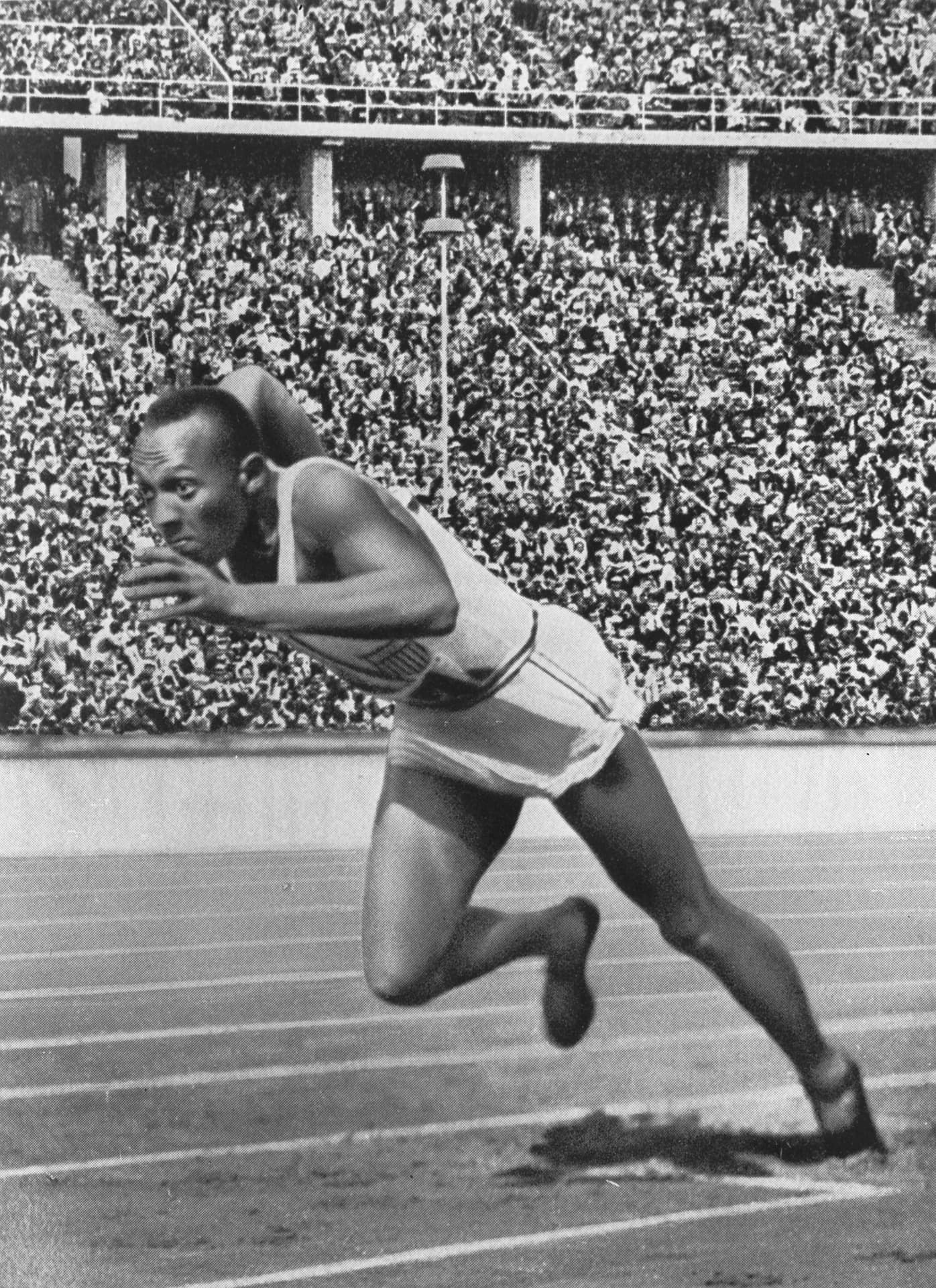
Jesse Owens famously won 4 gold medals, including in the 100m, at the 1936 Olympic games in Nazi Germany.
This chart shows the regional distribution of Olympic medalists in the men’s 100 metres, one of the most prestigious events in athletics. In the early decades of the modern Olympics, North America—especially the United States—dominated the event, winning the majority of medals from 1896 through much of the twentieth century. American sprinters benefited from strong collegiate athletics programs and a long tradition of competitive sprinting.
From the late twentieth century onward, however, the Caribbean and Latin American region emerged as a major force in sprinting. Countries such as Jamaica produced numerous elite sprinters, culminating in the dominance of athletes like Usain Bolt in the 2000s and 2010s. This reflects strong sprinting cultures, specialized coaching systems, and national emphasis on track and field in several Caribbean nations.
Other regions appear much less frequently. Western Europe and Eastern Europe/Soviet Union have occasionally produced medalists, but they have never matched the sustained success of North America or the Caribbean. Sub-Saharan Africa, despite its dominance in middle- and long-distance running, has rarely produced Olympic 100-metre medalists, highlighting how sprinting success is geographically concentrated.
This chart shows the regional distribution of athletes competing in the heats of the men’s 100 metres at the 2021 Tokyo Olympics. The Caribbean accounts for the largest share of participants, with about 25.7%, which reflects the region’s exceptional strength in sprinting. Small Caribbean nations such as Jamaica, Trinidad and Tobago, and the Bahamas consistently produce world-class sprinters and have built strong sprinting traditions despite their relatively small populations.
Sub-Saharan Africa (15.7%), Europe (14.3%), East Asia (14.3%), and the Middle East and North Africa (14.3%) also contribute significant numbers of competitors. However, these regions generally achieve fewer medals compared with their level of participation, highlighting the continued dominance of North American and Caribbean sprinters in elite competition.
North America accounts for 8.6% of participants, largely representing the United States and Canada, while South America and Oceania contribute relatively small numbers of athletes. The chart shows that participation in the event is globally widespread, but success in the Olympic 100 metres remains concentrated in a few regions with strong sprinting cultures and development systems.
DATA TABLE
4. Finishing Time, Country and Racial Group of 100 Metre Olympic Medallists
OTHER PAGES ABOUT SPORT
Source:
https://www.olympic.org/athletics/100m-men
Banner Image by Olympia-kuva Oy – Licensed Under Creative Commons Attribution 4.0