
British individual Olympic champions won 65 gold medals across the five Summer Games from Sydney 2000 to Rio 2016. This page keeps that historical focus, examining the 42 athletes behind those victories. Ben Ainslie, Chris Hoy and Mo Farah each won four individual titles within the period, while cycling supplied the largest sport total. Seven charts explore birthplace, women and men among the champions, sport totals, repeat winners and the timing of success. A scrollable reference table brings together every athlete’s events, birthplace, height and individual golds at each Games.
Scope: individual gold-medal events representing Great Britain, 2000, 2004, 2008, 2012 and 2016. This is not an all-time ranking and excludes Tokyo 2020 and Paris 2024. Open individual equestrian and single-person sailing events are included; crews, teams, pairs, relays and synchronised events are excluded. Later career medals do not enter the totals.
Statistics
- Individual champions by region of birth
- Women and men among individual champions
- Individual gold medals by sport
- Champions with at least three individual golds
- Gold-winning spans of five leading champions
- How many individual golds did each champion win?
- Individual gold medals and champions at each Games
- Individual champions reference table
1. Individual champions by region of birth
Southern England — 19Midlands — 7Northern England — 7Scotland — 4Wales — 2Born outside the UK — 3
Nineteen of the 42 individual champions were born in southern England, a grouping that combines London, the South East, the South West and the East of England. The Midlands and northern England each contribute seven athletes, Scotland four and Wales two. Three champions were born outside the United Kingdom. Each person counts once, irrespective of how many individual gold medals they won between Sydney 2000 and Rio 2016.
Birthplace is a geographical fact, not a complete account of where an athlete grew up, trained or developed their sporting career. Ben Ainslie, for example, belongs to the North West England group because he was born in Macclesfield, even though his sailing career is strongly associated with southern England. The table preserves the more detailed regional assignments behind these broader slices. These are counts within a selected group of Olympic champions, not population-adjusted success rates. They cannot establish which region offers the strongest sporting opportunities or explain why a particular athlete succeeded.
Source: Olympedia, Great Britain, edition results and linked athlete profiles. Individual Summer Olympic golds, 2000–2016 only. Team, relay, paired and crew events excluded. Reviewed 19 October 2026. Each athlete counted once. Detailed regions appear in the table. No population adjustment.

Chris Hoy was born in Edinburgh and is one of the four Scotland-born champions counted in the pie above. This photograph shows him at the homecoming celebrations in Glasgow on 14 September 2012, following the London Games. His individual golds came in the 2004 track time trial, the 2008 sprint and keirin, and the 2012 keirin. Those four victories contribute four medals to the later charts but only one person to the birthplace comparison. His team sprint titles are excluded from this page’s individual-event totals. The distinction explains why the figures here differ from his widely recognised six-gold Olympic career.
2. Women and men among individual champions
Men — 28Women — 14
The group contains 28 men and fourteen women, so women account for one third of the 42 individual champions. This pie counts different people, not medals. A champion who won several events or returned to win at another Games still contributes one entry. That makes the chart a useful description of who appears in the table without allowing a handful of multiple winners to dominate it.
The comparison covers individual Summer Olympic gold medallists representing Great Britain during 2000–2016. It excludes athletes whose gold medals came only in team, relay, paired or crew events. Women’s hockey champions and members of winning rowing crews therefore fall outside this particular group, despite their important place in British Olympic history. Open equestrian events are included, with the athletes classified using the biographical sex field in Olympedia. The resulting shares do not describe the entire British Olympic team, all medal winners or the balance of events available to women and men across these Games.
Source: Olympedia, Great Britain, edition results and linked athlete profiles. Individual Summer Olympic golds, 2000–2016 only. Team, relay, paired and crew events excluded. Reviewed 19 October 2026. Unique athletes, using the source’s biographical sex field; includes open individual events.
3. Individual gold medals by sport
MenWomen
Cycling supplied seventeen of the 65 individual gold medals in this period, combining track and road events. Athletics followed with eleven and sailing with eight. Boxing contributed six, while canoeing and equestrian events each supplied four. Swimming added three. The remaining twelve victories are grouped together to keep the chart readable, with their sports and events identified in the reference table.
The stacked colours distinguish victories by male and female athletes, including those competing in open equestrian events. Every winning event counts once: Kelly Holmes’s two Athens titles therefore add two to athletics, while Rebecca Adlington’s Beijing double adds two to swimming. This is different from counting distinct champions. Broader sport groups combine related disciplines consistently, so cycling includes both road and track, canoeing includes sprint and slalom, and equestrian includes dressage, eventing and jumping. The chart deliberately excludes team events. Cycling’s seventeen is therefore an individual-event subtotal, not Great Britain’s complete cycling gold-medal haul for these five Olympics.
Source: Olympedia, Great Britain, edition results and linked athlete profiles. Individual Summer Olympic golds, 2000–2016 only. Team, relay, paired and crew events excluded. Reviewed 19 October 2026. Other sports: shooting, taekwondo, tennis, triathlon and gymnastics 2 each; modern pentathlon and golf 1 each.
4. Champions with at least three individual golds
Ben Ainslie, Chris Hoy and Mo Farah each won four individual Olympic gold medals during the 2000–2016 window. Bradley Wiggins and Jason Kenny followed with three apiece. These five athletes are the only members of this group to reach at least three individual titles, making a compact comparison possible without dropping athletes tied at the qualifying threshold.
Their routes to those totals were different. Ainslie won at four successive Games, while Farah earned two distance-running titles in London and repeated that double in Rio. Hoy’s individual victories included the track time trial, sprint and keirin. Wiggins won individual pursuits before adding the road time trial, and Kenny combined sprint and keirin wins. The chart excludes their team golds and any titles won after Rio 2016, so its figures should not be confused with full career Olympic totals. All bars use the same blue because they measure the same quantity. The adjacent timeline examines how those titles were spread across editions.
Source: Olympedia, Great Britain, edition results and linked athlete profiles. Individual Summer Olympic golds, 2000–2016 only. Team, relay, paired and crew events excluded. Reviewed 19 October 2026. Individual titles within the date window, not complete career gold totals.
5. Gold-winning spans of five leading champions
Ben Ainslie’s individual gold-winning sequence stretches from Sydney 2000 to London 2012, the longest span among the five athletes shown. Chris Hoy and Bradley Wiggins each have an eight-year interval between their first and last individual titles within this period. Mo Farah and Jason Kenny have four-year spans, running from London 2012 to Rio 2016.
The horizontal ranges connect the first and last gold-winning editions, rather than representing uninterrupted competition or a gold medal in every intervening year. They are also not complete career timelines: silver medals, team titles and appearances without individual gold are outside the endpoints. The selection is the same five athletes who won at least three individual golds in the preceding chart. This makes the distinction between total and duration visible. Farah collected four golds across two editions, whereas Ainslie collected four across four editions. Wiggins also changed disciplines within cycling, winning individual pursuit titles before his London road time-trial victory.
Source: Olympedia, Great Britain, edition results and linked athlete profiles. Individual Summer Olympic golds, 2000–2016 only. Team, relay, paired and crew events excluded. Reviewed 19 October 2026. Endpoints are first and last individual gold-winning editions within 2000–2016; not full careers.

Ben Ainslie celebrates after winning Olympic gold at Weymouth on 5 August 2012. His range in the preceding chart begins at Sydney 2000 and ends at London 2012, covering four successive gold-winning Games. The first title came in the Laser class, followed by three in the Finn. These were single-person sailing events, so all four qualify for the individual totals used here. His earlier silver medal at Atlanta 1996 falls outside both the gold-only measure and the chosen date window. The photograph marks the final endpoint of the longest gold-winning span among the five leading champions compared on this page.
6. How many individual golds did each champion win?
1 gold — 272 golds — 103 golds — 24 golds — 3
Most champions in this group won one individual gold medal during the five-Games window: 27 of the 42 athletes fall into that category. Ten won two titles, two won three and three won four. The doughnut gives every athlete equal weight and uses progressively darker shades for higher individual-gold totals, making the categories meaningful without assigning unrelated colours to names.
A single title here does not mean an athlete won only one Olympic medal. They may also have earned silvers, bronzes, team golds or medals outside the chosen dates. Likewise, two individual golds could come at one Games, as with Rebecca Adlington in Beijing and Max Whitlock in Rio, or at separate editions, as with Andy Murray. Fifteen athletes were repeat individual champions within the period, accounting for 38 of its 65 individual gold medals. The remaining 27 titles came from the one-gold group. Reading this chart alongside the leaders’ bars shows how concentrated the medal total was without overlooking first-time champions.
Source: Olympedia, Great Britain, edition results and linked athlete profiles. Individual Summer Olympic golds, 2000–2016 only. Team, relay, paired and crew events excluded. Reviewed 19 October 2026. Each of the 42 athletes counted once. Categories describe individual golds within the period.
7. Individual gold medals and champions at each Games
Individual gold medalsIndividual champions
Individual gold medals rose from nine at Sydney 2000 to nineteen at London 2012, before finishing at eighteen in Rio. Athens had six and Beijing thirteen. The second line counts different individual champions at each Games: nine, five, eleven, eighteen and fifteen respectively. Both series describe the same selection of events, but answer different questions about the scale of success.
Where the lines separate, at least one athlete won more than one individual title. Kelly Holmes explains the one-medal difference in Athens. Chris Hoy and Rebecca Adlington each won twice in Beijing, while Mo Farah supplied London’s additional title beyond its number of champions. In Rio, Farah, Jason Kenny and Max Whitlock each completed individual doubles. Athletes who won at more than one Games appear in each relevant edition, so adding the distinct-champion line does not produce the overall total of 42 people. These are individual-event results only; they should not be read as Great Britain’s full gold-medal totals or overall Olympic medal table.
Source: Olympedia, Great Britain, edition results and linked athlete profiles. Individual Summer Olympic golds, 2000–2016 only. Team, relay, paired and crew events excluded. Reviewed 19 October 2026. Champion counts are unique within each edition; repeat winners can appear at several Games.
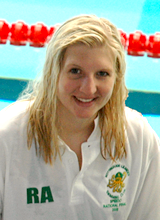
Rebecca Adlington is pictured in May 2008, before winning the women’s 400 and 800 metres freestyle at the Beijing Olympics. Her double helps explain why Beijing’s gold-medal line sits above its distinct-champion line in the chart above. She contributes two individual titles but one athlete. Chris Hoy also won two individual events at those Games, accounting for the other extra gold beyond Beijing’s eleven champions. Adlington’s birthplace, Mansfield, puts her in the East Midlands entry in the reference table. Her later bronze medals at London are not included because this page follows individual gold medals rather than every Olympic podium finish.
8. British individual Olympic champions, 2000–2016
All 42 athletes, with five edition columns totalling 65 individual golds. Scroll vertically and sideways. Heights are biographical listings, not measurements taken at every Games. Birthplace describes where an athlete was born, not where they grew up or trained. Laura Kenny competed as Laura Trott; Jessica Ennis-Hill won her title as Jessica Ennis.
| Athlete | Sport | Individual gold-winning events | Sex (source) | Date of birth | Place of birth | Birth region | Height (cm) | 2000 gold | 2004 gold | 2008 gold | 2012 gold | 2016 gold | Individual gold total | First gold year in period | Last gold year in period | Gold-winning editions | Athlete source |
|---|---|---|---|---|---|---|---|---|---|---|---|---|---|---|---|---|---|
| Ben Ainslie | Sailing | One-Person Dinghy, Open; One-Person Heavyweight Dinghy, Men | Male | 5 February 1977 | Macclesfield, England (GBR) | North West England | 183 | 1 | 1 | 1 | 1 | 0 | 4 | 2000 | 2012 | 4 | Olympedia profile |
| Chris Hoy | Cycling | Keirin, Men; Sprint, Men; Track Time Trial, Men | Male | 23 March 1976 | Edinburgh, Scotland (GBR) | Scotland | 185 | 0 | 1 | 2 | 1 | 0 | 4 | 2004 | 2012 | 3 | Olympedia profile |
| Mo Farah | Athletics | 10,000 metres, Men; 5,000 metres, Men | Male | 23 March 1983 | Somalia (precise place unspecified in source) | Born outside the UK | 175 | 0 | 0 | 0 | 2 | 2 | 4 | 2012 | 2016 | 2 | Olympedia profile |
| Bradley Wiggins | Cycling | Individual Pursuit, Men; Time Trial, Individual, Men | Male | 28 April 1980 | Gent (Ghent), Oost-Vlaanderen (BEL) | Born outside the UK | 190 | 0 | 1 | 1 | 1 | 0 | 3 | 2004 | 2012 | 3 | Olympedia profile |
| Jason Kenny | Cycling | Keirin, Men; Sprint, Men | Male | 23 March 1988 | Bolton, England (GBR) | North West England | 178 | 0 | 0 | 0 | 1 | 2 | 3 | 2012 | 2016 | 2 | Olympedia profile |
| Alistair Brownlee | Triathlon | Olympic Distance, Men | Male | 23 April 1988 | Dewsbury, England (GBR) | Yorkshire and the Humber | 184 | 0 | 0 | 0 | 1 | 1 | 2 | 2012 | 2016 | 2 | Olympedia profile |
| Andy Murray | Tennis | Singles, Men | Male | 15 May 1987 | Glasgow, Scotland (GBR) | Scotland | 190 | 0 | 0 | 0 | 1 | 1 | 2 | 2012 | 2016 | 2 | Olympedia profile |
| Charlotte Dujardin | Equestrian | Individual, Open | Female | 13 July 1985 | Enfield, England (GBR) | London | 170 | 0 | 0 | 0 | 1 | 1 | 2 | 2012 | 2016 | 2 | Olympedia profile |
| Jade Jones | Taekwondo | Featherweight, Women | Female | 21 March 1993 | Bodelwyddan, Wales (GBR) | Wales | 156 | 0 | 0 | 0 | 1 | 1 | 2 | 2012 | 2016 | 2 | Olympedia profile |
| Kelly Holmes | Athletics | 1,500 metres, Women; 800 metres, Women | Female | 19 April 1970 | Pembury, England (GBR) | South East England | 163 | 0 | 2 | 0 | 0 | 0 | 2 | 2004 | 2004 | 1 | Olympedia profile |
| Laura Kenny (Trott) | Cycling | Omnium, Women | Female | 24 April 1992 | Harlow, England (GBR) | East of England | 164 | 0 | 0 | 0 | 1 | 1 | 2 | 2012 | 2016 | 2 | Olympedia profile |
| Max Whitlock | Gymnastics | Floor Exercise, Men; Pommel Horse, Men | Male | 13 January 1993 | Hemel Hempstead, England (GBR) | East of England | 167 | 0 | 0 | 0 | 0 | 2 | 2 | 2016 | 2016 | 1 | Olympedia profile |
| Nicola Adams | Boxing | Flyweight, Women | Female | 26 October 1982 | Leeds, England (GBR) | Yorkshire and the Humber | 164 | 0 | 0 | 0 | 1 | 1 | 2 | 2012 | 2016 | 2 | Olympedia profile |
| Rebecca Adlington | Swimming | 400 metres Freestyle, Women; 800 metres Freestyle, Women | Female | 17 February 1989 | Mansfield, England (GBR) | East Midlands | 179 | 0 | 0 | 2 | 0 | 0 | 2 | 2008 | 2008 | 1 | Olympedia profile |
| Victoria Pendleton | Cycling | Keirin, Women; Sprint, Women | Female | 24 September 1980 | Hitchin, England (GBR) | East of England | 165 | 0 | 0 | 1 | 1 | 0 | 2 | 2008 | 2012 | 2 | Olympedia profile |
| Adam Peaty | Swimming | 100 metres Breaststroke, Men | Male | 28 December 1994 | Uttoxeter, England (GBR) | West Midlands | 191 | 0 | 0 | 0 | 0 | 1 | 1 | 2016 | 2016 | 1 | Olympedia profile |
| Anthony Joshua | Boxing | Super-Heavyweight, Men | Male | 15 October 1989 | Watford, England (GBR) | East of England | 198 | 0 | 0 | 0 | 1 | 0 | 1 | 2012 | 2012 | 1 | Olympedia profile |
| Audley Harrison | Boxing | Super-Heavyweight, Men | Male | 26 October 1971 | Park Royal, England (GBR) | London | 198 | 1 | 0 | 0 | 0 | 0 | 1 | 2000 | 2000 | 1 | Olympedia profile |
| Christine Ohuruogu | Athletics | 400 metres, Women | Female | 17 May 1984 | Newham, England (GBR) | London | 172 | 0 | 0 | 1 | 0 | 0 | 1 | 2008 | 2008 | 1 | Olympedia profile |
| Denise Lewis | Athletics | Heptathlon, Women | Female | 27 August 1972 | West Bromwich, England (GBR) | West Midlands | 176 | 1 | 0 | 0 | 0 | 0 | 1 | 2000 | 2000 | 1 | Olympedia profile |
| Ed McKeever | Canoeing | Kayak Singles (K1), 200 metres, Men | Male | 27 August 1983 | Bath, England (GBR) | South West England | 173 | 0 | 0 | 0 | 1 | 0 | 1 | 2012 | 2012 | 1 | Olympedia profile |
| Giles Scott | Sailing | One-Person Heavyweight Dinghy, Men | Male | 23 June 1987 | Huntingdon, England (GBR) | East of England | 197 | 0 | 0 | 0 | 0 | 1 | 1 | 2016 | 2016 | 1 | Olympedia profile |
| Greg Rutherford | Athletics | Long Jump, Men | Male | 17 November 1986 | Milton Keynes, England (GBR) | South East England | 188 | 0 | 0 | 0 | 1 | 0 | 1 | 2012 | 2012 | 1 | Olympedia profile |
| Iain Percy | Sailing | One-Person Heavyweight Dinghy, Men | Male | 21 March 1976 | Southampton, England (GBR) | South East England | 185 | 1 | 0 | 0 | 0 | 0 | 1 | 2000 | 2000 | 1 | Olympedia profile |
| James DeGale | Boxing | Middleweight, Men | Male | 3 February 1986 | Harlesden, England (GBR) | London | 183 | 0 | 0 | 1 | 0 | 0 | 1 | 2008 | 2008 | 1 | Olympedia profile |
| Jason Queally | Cycling | Track Time Trial, Men | Male | 11 May 1970 | Great Haywood, England (GBR) | West Midlands | 183 | 1 | 0 | 0 | 0 | 0 | 1 | 2000 | 2000 | 1 | Olympedia profile |
| Jessica Ennis-Hill | Athletics | Heptathlon, Women | Female | 28 January 1986 | Sheffield, England (GBR) | Yorkshire and the Humber | 165 | 0 | 0 | 0 | 1 | 0 | 1 | 2012 | 2012 | 1 | Olympedia profile |
| Joe Clarke | Canoeing | Kayak Singles (K1), Slalom, Men | Male | 3 November 1992 | Shelton, Stoke-on-Trent, England (GBR) | West Midlands | 182 | 0 | 0 | 0 | 0 | 1 | 1 | 2016 | 2016 | 1 | Olympedia profile |
| Jonathan Edwards | Athletics | Triple Jump, Men | Male | 10 May 1966 | Westminster, England (GBR) | London | 182 | 1 | 0 | 0 | 0 | 0 | 1 | 2000 | 2000 | 1 | Olympedia profile |
| Justin Rose | Golf | Individual, Men | Male | 30 July 1980 | Johannesburg, Gauteng (RSA) | Born outside the UK | 191 | 0 | 0 | 0 | 0 | 1 | 1 | 2016 | 2016 | 1 | Olympedia profile |
| Leslie Law | Equestrian | Individual, Open | Male | 5 May 1965 | Hereford, England (GBR) | West Midlands | 183 | 0 | 1 | 0 | 0 | 0 | 1 | 2004 | 2004 | 1 | Olympedia profile |
| Liam Heath | Canoeing | Kayak Singles (K1), 200 metres, Men | Male | 17 August 1984 | Guildford, England (GBR) | South East England | 182 | 0 | 0 | 0 | 0 | 1 | 1 | 2016 | 2016 | 1 | Olympedia profile |
| Luke Campbell | Boxing | Bantamweight, Men | Male | 27 September 1987 | Kingston upon Hull, England (GBR) | Yorkshire and the Humber | 175 | 0 | 0 | 0 | 1 | 0 | 1 | 2012 | 2012 | 1 | Olympedia profile |
| Nick Skelton | Equestrian | Individual, Open | Male | 30 December 1957 | Bedworth, England (GBR) | West Midlands | 175 | 0 | 0 | 0 | 0 | 1 | 1 | 2016 | 2016 | 1 | Olympedia profile |
| Nicole Cooke | Cycling | Road Race, Women | Female | 13 April 1983 | Swansea, Wales (GBR) | Wales | 167 | 0 | 0 | 1 | 0 | 0 | 1 | 2008 | 2008 | 1 | Olympedia profile |
| Paul Goodison | Sailing | One-Person Dinghy, Men | Male | 29 November 1977 | Sheffield, England (GBR) | Yorkshire and the Humber | 180 | 0 | 0 | 1 | 0 | 0 | 1 | 2008 | 2008 | 1 | Olympedia profile |
| Peter Wilson | Shooting | Double Trap, Men | Male | 15 September 1986 | Dorchester, England (GBR) | South West England | 198 | 0 | 0 | 0 | 1 | 0 | 1 | 2012 | 2012 | 1 | Olympedia profile |
| Rebecca Romero | Cycling | Individual Pursuit, Women | Female | 24 January 1980 | Carshalton, England (GBR) | London | 182 | 0 | 0 | 1 | 0 | 0 | 1 | 2008 | 2008 | 1 | Olympedia profile |
| Richard Faulds | Shooting | Double Trap, Men | Male | 16 March 1977 | Guildford, England (GBR) | South East England | 183 | 1 | 0 | 0 | 0 | 0 | 1 | 2000 | 2000 | 1 | Olympedia profile |
| Shirley Robertson | Sailing | One-Person Dinghy, Women | Female | 15 July 1968 | Dundee, Scotland (GBR) | Scotland | 169 | 1 | 0 | 0 | 0 | 0 | 1 | 2000 | 2000 | 1 | Olympedia profile |
| Steph Cook | Modern Pentathlon | Individual, Women | Female | 7 February 1972 | Irvine, Scotland (GBR) | Scotland | 172 | 1 | 0 | 0 | 0 | 0 | 1 | 2000 | 2000 | 1 | Olympedia profile |
| Tim Brabants | Canoeing | Kayak Singles (K1), 1,000 metres, Men | Male | 23 January 1977 | Chertsey, England (GBR) | South East England | 189 | 0 | 0 | 1 | 0 | 0 | 1 | 2008 | 2008 | 1 | Olympedia profile |
Other pages about Olympics
- Summer Olympic Medals
- Olympic 100 Metres
- Berlin 1936 Olympics
- Helsinki 1952 Olympics
- Mexico City 1968 Olympics
- Seoul 1988 Olympics
- Barcelona 1992 Olympics
- Atlanta 1996 Olympics
- Sydney 2000 Olympics
- Athens 2004 Olympics
- Beijing 2008 Olympics
- London 2012 Olympics
- Rio 2016 Olympics
- US Olympians
- Winter Olympics
Sources and image credits
Source: Olympedia, Great Britain, edition results and linked athlete profiles. Individual Summer Olympic golds, 2000–2016 only. Team, relay, paired and crew events excluded. Reviewed 19 October 2026. Edition sources: 2000, 2004, 2008, 2012, 2016. The table links each biographical profile. Event-level results and source identifiers are also included in the accompanying data. Birth regions are editorial geographical assignments; no ancestry classifications or population-normalised claims are made. Mo Farah’s source does not specify a precise birthplace, so no city is supplied.
All photographs link to their Commons description pages and reuse terms. The Hoy image uses the existing credited Commons crop; no additional edits were made. Banner retained from the existing page, credited there to Citizen59 under CC BY-SA 3.0.