
INTRODUCTION
Britain has produced the 2nd highest number of Nobel laureates of all time, 2nd only to the United States. As with other countries with a large number of Nobel laureates, most British Nobel laureates have been in the scientific fields. On a per capita basis, it has the most Nobel laureates of all the major countries of the world.
Identifying which country someone belongs to isn’t always straightforward as many people have a nationality which is different from the place in which they were born. This is particularly true among leading scientific researchers who often move for work to global hubs of research such as the United Kingdom. For the sake of simplicity, this page looks only at Nobel prize winners born in the United Kingdom who were also listed in the United Kingdom section of the Wikipedia page “List of Nobel laureates by country”,
Charts
1. Distribution By Award of British Nobel Prize Winners
2. British Nobel Prize Winners by Region of Birth
3. Number of British Nobel Prize Winners Born in Region Per Million Inhabitants (2019 Population)
Data Table
4. UK Born Nobel Prize Winners by Award, Place and Region of Birth
The pie chart shows the distribution of Nobel Prize awards won by British laureates across disciplines. Chemistry and Physiology & Medicine each account for the largest share at 26%, followed by Physics at 22.9%, highlighting the dominance of scientific fields. Peace and Economics represent smaller proportions, while Literature holds the lowest share. This science-heavy distribution is typical of countries with large numbers of Nobel laureates, reflecting strong research institutions and long-standing investment in scientific innovation. A notable example is Frederick Sanger, who uniquely won the Nobel Prize in Chemistry twice, illustrating Britain’s exceptional contribution to groundbreaking scientific discoveries and global research leadership.
The pie chart illustrates the regional distribution of British Nobel Prize winners by place of birth. London accounts for the largest share at 18.8%, reflecting its historical role as a major educational and cultural centre with access to leading universities and research institutions. Scotland and the South East of England follow with 14.6% and 13.5%, while North West England contributes 10.4%. Yorkshire and the Humber and South West England each represent 9.4%, with smaller shares from other regions. A notable London-born laureate is Harold Pinter, awarded the Nobel Prize in Literature, illustrating the capital’s influence on Britain’s intellectual and cultural achievements.
The chart shows the number of British Nobel Prize winners per million inhabitants by region, grouped by discipline. Overall, Scotland records the highest per-capita total, driven largely by scientific awards, reflecting its strong academic tradition and historic universities. A notable example is Alexander Fleming, whose discovery of penicillin highlights Scotland’s major contribution to medical science.
Several English regions, including London and Yorkshire and the Humber, also demonstrate strong representation in the sciences, though with smaller contributions in literature and peace. Wales and the South West show modest but balanced distributions across categories.
Northern Ireland displays a distinctive pattern, with all Nobel Prize winners originating from the region receiving awards for Peace rather than scientific or literary achievements. This reflects the historical context of the Troubles and efforts toward conflict resolution. A key figure is John Hume, whose Nobel Peace Prize recognised his role in advancing the Northern Ireland peace process. Overall, the chart highlights significant regional variation in Britain’s Nobel legacy.
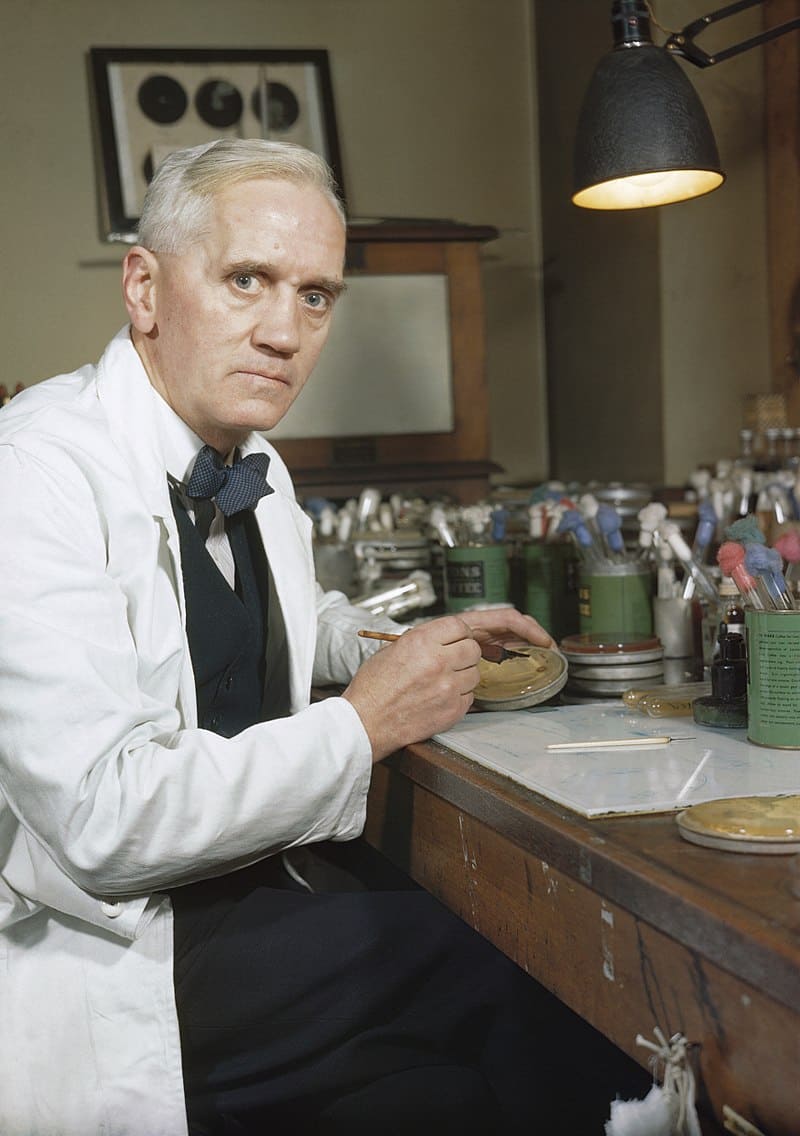
Alexander Fleming won the Nobel prize for Physiology & Medicine in 1945 for the discovery of Penicillin.
4. British Nobel Prize Winners by Award, Place and Region of Birth
OTHER PAGES ABOUT NOBEL PRIZES AND ACADEMICS
Source:
Charts created using OpenOffice Calc.