INTRODUCTION
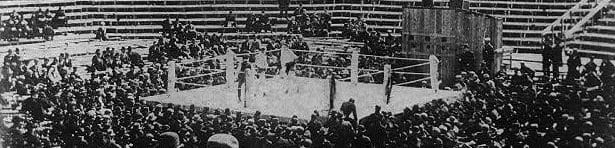
In boxing, there are many different belts but the lineal heavyweight champion can be traced to the first fight which was regarded as the world heavyweight boxing title match in 1885 in which John Sullivan defeated Dominick McCaffrey. The lineal champion is the fighter who defeats the previous lineal champion. One of the key differences between the lineal championship and a belt are that a lineal champion can’t be stripped of their title. For example when Muhammad Ali was stripped of his belts in 1969 for refusing to fight in Vietnam, he remained the lineal heavyweight champion. When a lineal champion retires, a new lineal champion is determined when the 2 fighters widely considered the best fight each other. This page looks at the lineal heavyweight champions in the following charts and data table:
Charts
1. Region of Birth of American Lineal Heavyweight Boxing Champions by Race
2. Lineal Heavyweight Champions by Country
3. Lineal Heavyweight Boxing Champions by Height
4. Knockout Percentage of Lineal Champions
5. Number of Lineal Defences
6. Number and Race of New Lineal Heavyweight Boxing Champions by Period
Data Table
7. Lineal Heavyweight Champions by Win%, KO%, Height, Reach, Race and Place of Origin
The South and the Northeast have been the two most dominant regions for producing American lineal heavyweight champions. The Midwest has a modest representation while the West has a very low representation. However this wasn’t always the case. The Midwest and the West produced 4 of the first 7 American lineal heavyweight champions. However soon the division became exclusively dominated by fighters from the South and the Northeast.
The majority, 58%, of black American lineal heavyweight champions were born in the south. The south has had the largest black population so this isn’t surprising. Both Muhammad Ali and Joe Louis, considered the two greatest heavyweights of all time, were from the south. The low representation of the south among white American lineal heavyweight champions is notable.
The Northeast shows the strongest representation for white American lineal heavyweight champions with 45%. The white ethnic communities such as Italians, Irish and Jews in northeastern cities like New York and Boston had a strong boxing tradition in the first half of the 20th century. Many famous boxing coaches in the latter part of the 20th century were from these communities, most notably Cus D’Amato.
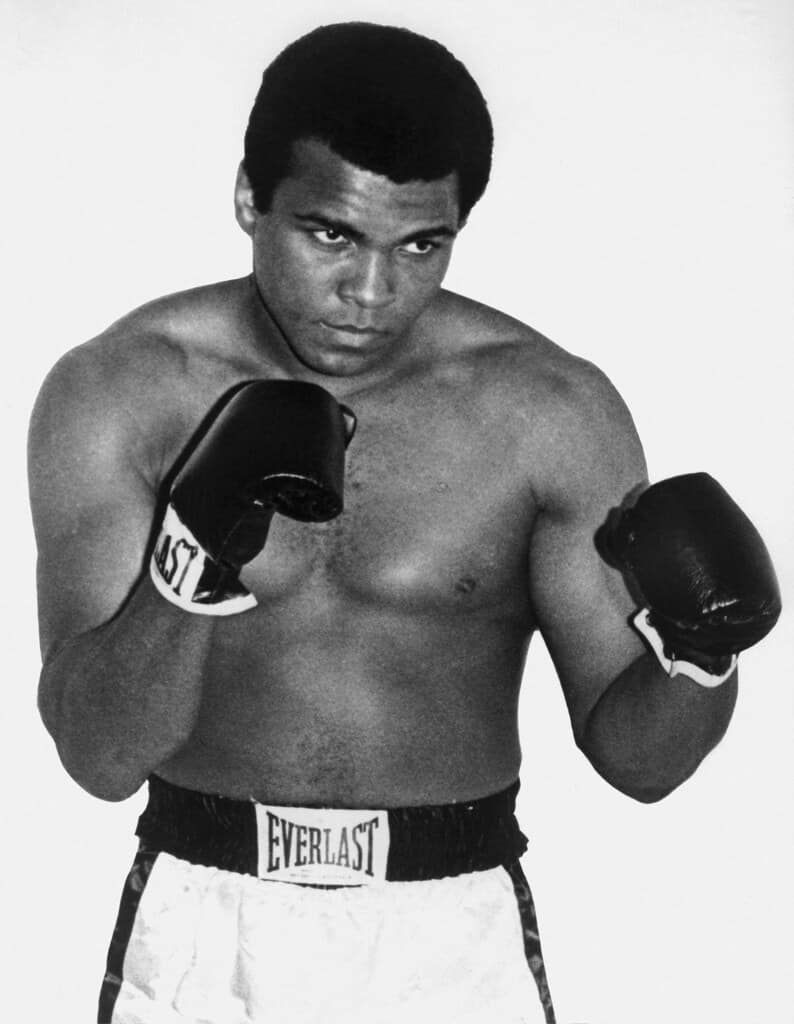
Photo by Sabatu
Muhammad Ali was one of the greatest boxers in history, known for his speed, skill, and charisma. Born in Louisville, he rose to global fame in the 1960s and became a symbol of confidence and resilience. As a Black fighter from the American South, Ali also played an important role in the civil rights era, speaking out on social and political issues. He won the world heavyweight title three times and was famous for his quick footwork and powerful punches. His legacy extends beyond boxing, making him a cultural icon worldwide.
This chart shows the overwhelming dominance of the United States in producing lineal heavyweight boxing champions, accounting for nearly 80% of all champions. Historically, heavyweight boxing has been closely associated with the USA, both culturally and competitively.
The United States has dominated heavyweight boxing for most of it’s history. This was true from the start but the dominance of American fighters was particularly so in the 60s, 70s and 80s when heavyweight boxing was completely dominated by American fighters. It’s certainly not the case now. 3 of the last 4 have been from outside the USA with Hasim Rahman (who had no successful lineal defences) being the only American fighter to be lineal champion this century. This cause of this dramatic change is debated.
Countries like the United Kingdom and Ukraine have become more prominent in recent decades, reflecting a shift toward a more globalised sport with stronger international competition.
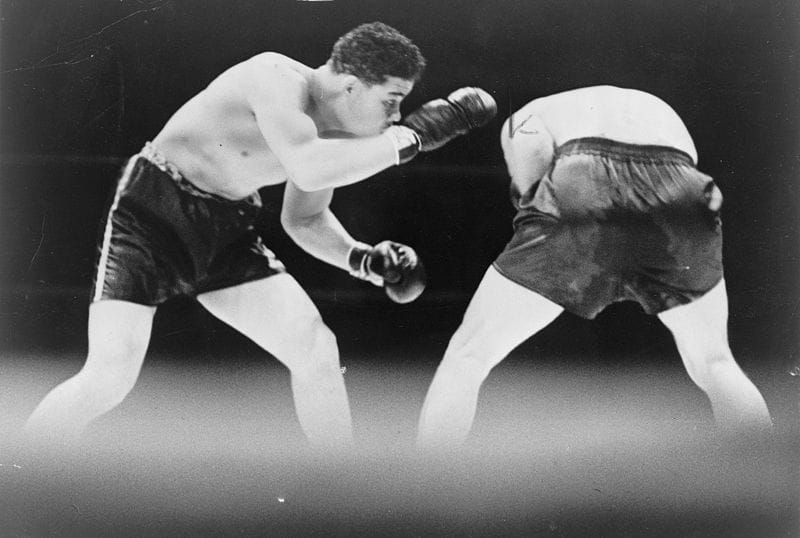
The bouts between Joe Louis and Max Schmeling are among the most famous in boxing history. The 2 fights between Joe Louis and Max Schmeling in the 1930s in shadow of World War II were highly charged with nationalistic sentiments. Schmeling won their first fight in 1936 with a stunning upset, exploiting weaknesses in Louis’s defense. In the 1938 rematch, Louis dominated and won by first-round knockout, becoming a symbol of American pride. These fights went beyond sport, reflecting the political tensions of the era and capturing global attention.
This chart shows a clear long-term increase in the average height of lineal heavyweight boxing champions. In the earliest period (1885–1909), champions were only marginally above 180cm on average, but by the modern era (1985–2019), they are more than 20cm taller on average. This reflects broader trends in athlete size, improved nutrition, and the evolution of boxing styles that increasingly favour reach and physical presence.
The tallest of the lineal heavyweight champions is Tyson Fury, the current lineal champion. This is unsurprising as there has been a gradual increase in height of boxers in the heavyweight division. The fighter he won the title from, Wladimir Klitschko, is the 3rd tallest of all time. Very notable, however, is the 2nd tallest Jess Willard who fought in the early 20th century. Mike Tyson and Rocky Marciano, two of the greats, are among the 4 shortest lineal heavyweight champions. This shows that height isn’t everything in heavyweight boxing.
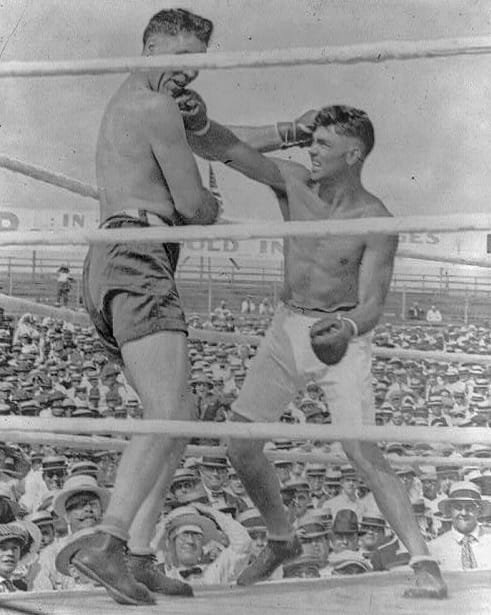
Photo by Pulitzer Publishing Company
The heavyweight title fight between Jess Willard and Jack Dempsey in 1919 was one of the most dramatic in boxing history. Willard, standing about 6 feet 6 inches tall, had a significant height and size advantage over Dempsey. Despite this, Dempsey overwhelmed him with speed and aggressive power, knocking him down multiple times in the first round. The brutal bout ended with Dempsey claiming the title, marking a shift in boxing toward faster, more relentless fighters and becoming one of the sport’s most famous upsets.
Rocky Marciano has the best Knockout rate of lineal heavyweight champions with 88%. George Foreman is second with 84%. Mike Tyson, who is 5th highest at 76%, is notable for the high amount of matches won by first round KO. Fighters with high KO percentages tend to be power punchers. Marciano, Foreman and Mike Tyson were formidable punchers. Notable on the graph is the low position of Muhammad Ali who is considered one of the greatest, if not the greatest, but has a relatively low 61% KO rate. This reflects his style of fighting where he would break opponents down with jabs rather than deliver powerful KO punch. In his prime, he would often win fights by TKOs. However in the latter part of his career, he won more fights by decisions.
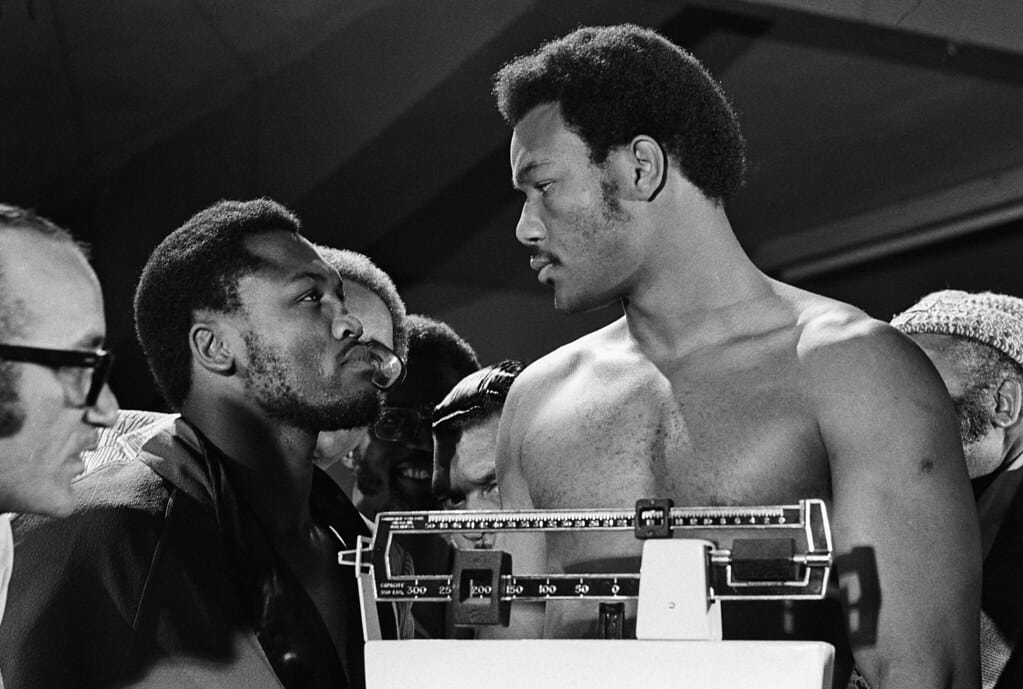
Photo by Sabatu
The fights between George Foreman and Joe Frazier are remembered for their intensity and dramatic outcome. When they met in 1973, Frazier was the undefeated heavyweight champion, but Foreman’s incredible strength and punching power quickly changed the fight. Known for his exceptionally high knockout rate, Foreman knocked Frazier down six times in just two rounds before winning by TKO. The result shocked the boxing world and marked Foreman’s rise to dominance. Their bouts highlighted the contrast between Frazier’s relentless pressure and Foreman’s devastating finishing ability.
The incredible run of title defences by Joe Louis, the Brown Bomber, can be seen from this chart. He far exceeds anyone else with 25 total defences from 1937 to 1948. Second is Muhammad Ali with 19 total lineal defences. Muhammad Ali is notable in being lineal champion 3 separate times, winning his title first when he famously defeated Sonny Liston in 1964. Joe Louis and Muhammad Ali are widely considered the two greatest heavyweight boxers of all time. Mike Tyson notably has only 2 lineal defences which doesn’t reflect his domination of the division during the 80s. This is due to the fact that for much of his time as undisputed heavyweight champion, Michael Spinks remained the lineal champion. Mike Tyson eventually defeated Spinks to become lineal champion in 1988 but was famously defeated by Buster Douglas 3 fights later in a shock defeat. 10 lineal heavyweight champions don’t have any lineal defences. These are often fighters who won the title unexpectedly such as Buster Douglas and Hasim Rahman.
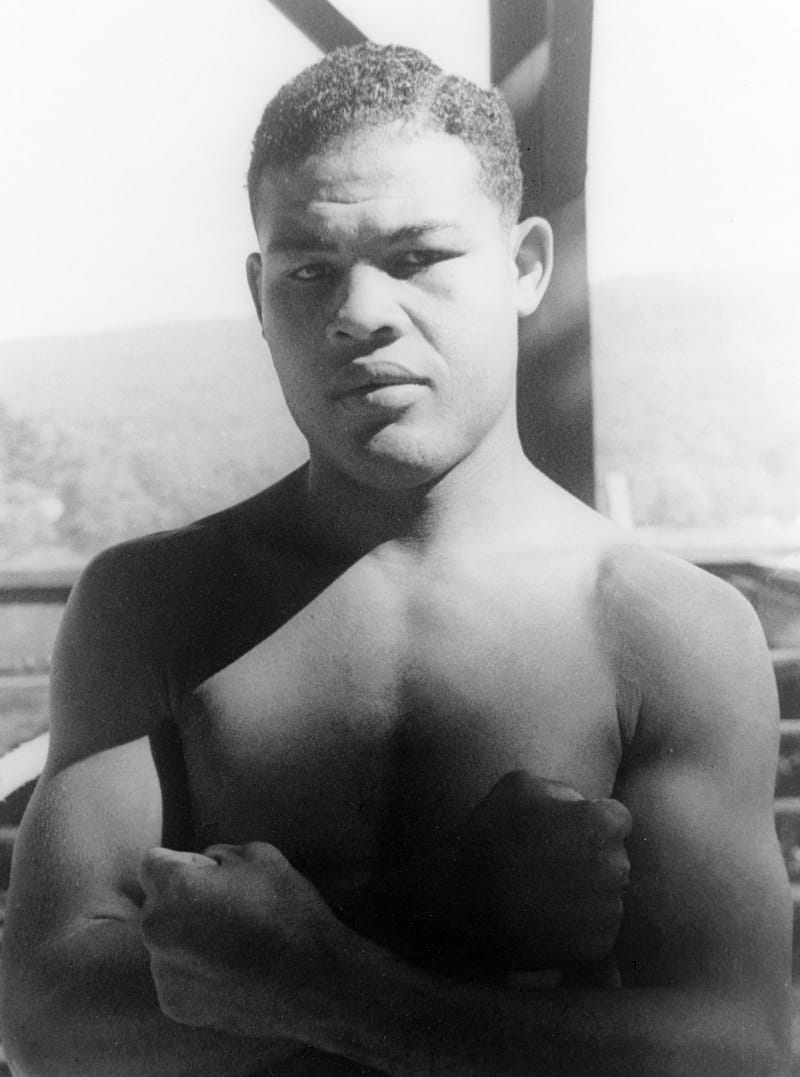
Joe Louis, known as the “Brown Bomber,” was one of the greatest heavyweight champions in boxing history. Rising to prominence in the 1930s, he became a symbol of strength and unity during a difficult era. Louis held the world heavyweight title for over a decade and made a record number of defenses, including the most lineal title defenses in history. Known for his powerful punches and precise technique, he dominated many top opponents. His victories, especially against Max Schmeling, carried deep cultural significance and helped solidify his lasting legacy in the sport.
In the early days of heavyweight boxing, it was almost exclusively contested between white boxers. Of the first 15 lineal heavyweight champions, only Jack Johnson was black. After Jack Johnson, black fighters were effectively barred from competing for the heavyweight title for years. After Joe Louis became champion, things changed. Although two white fighters, Rocky Marciano and Ingemar Johansson, were prominent in the 1950s, black fighters would soon come to completely dominate the division. From Ingemar Johansson’s loss to Floyd Patterson in 1960 till Wladimir Klitschko became lineal heavyweight champion in 2009, all lineal heavyweight champions were black fighters. This has changed recently. With the decline of black Americans from the division, there has been a rise in European fighters. The last two lineal heavyweight champions, Wladimir Klitschko and Tyson Fury, are white Europeans.
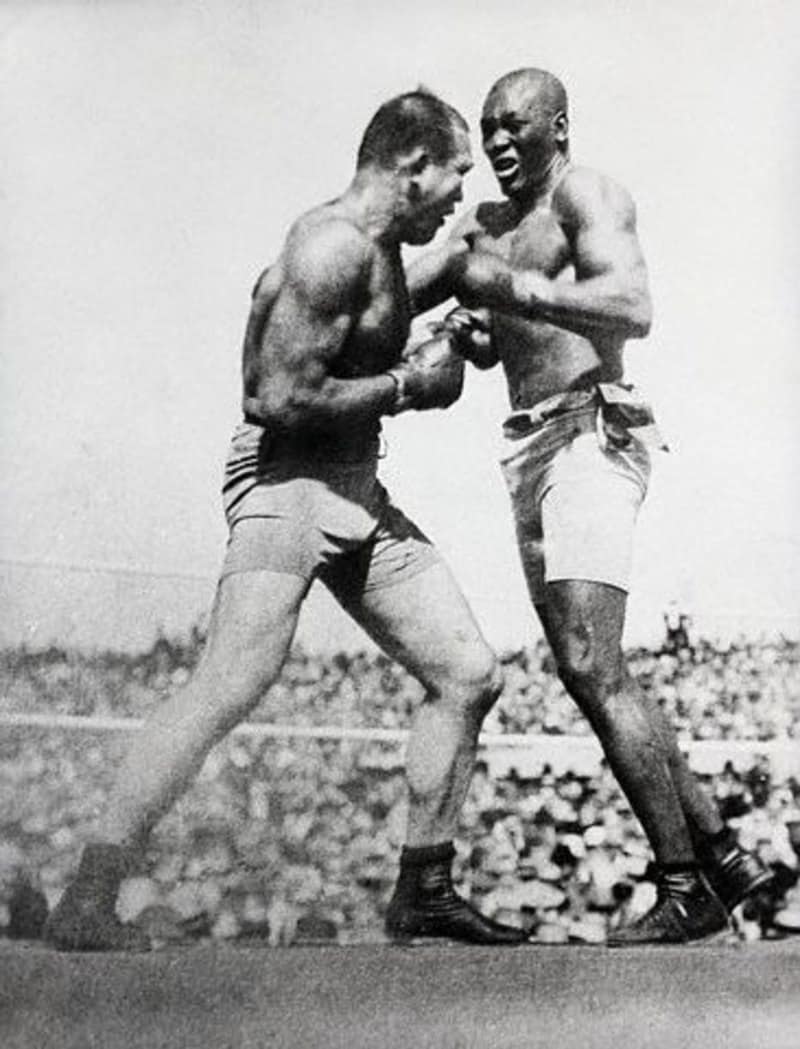
The 1910 bout between Jack Johnson and James J. Jeffries, known as the “Fight of the Century,” carried enormous racial significance. Johnson, the first Black heavyweight champion, faced Jeffries, who came out of retirement amid calls for a white champion to reclaim the title. The fight symbolized deep racial tensions in the United States at the time. Johnson dominated and defeated Jeffries, proving his superiority in the ring. His victory challenged prevailing racial attitudes and led to widespread reactions, making the bout one of the most historically important events in boxing history.