INTRODUCTION
This pages shows statistics about dinosaurs.
Charts
1. British Dinosaurs by Period and Diet
2. Distribution of T-Rex Specimen Finds
3. Top 10 Biggest Carnivorous Dinosaurs by Length
The chart shows the distribution of British dinosaurs by geological period and diet. In the Late Triassic, there is only a small omnivorous presence, reflecting the limited early fossil record in Britain. Diversity increases in the Jurassic, particularly in the Mid and Late Jurassic, where both carnivores and herbivores are well represented. A key example is Megalosaurus, a Late Jurassic carnivore and notably the first dinosaur ever formally named (in 1824), marking Britain’s central role in early paleontology.
By the Early and especially Late Cretaceous, herbivores dominate, with six compared to four carnivores. This suggests flourishing plant-eating species supported by expanding vegetation and changing ecosystems. Overall, the chart highlights the gradual rise in dinosaur diversity in Britain, peaking in the Cretaceous period.
The chart shows the distribution of Tyrannosaurus rex specimen finds by location, with Montana accounting for a dominant 60% of discoveries. This reflects the rich fossil beds of the Hell Creek Formation, which spans Montana and parts of neighboring states. South Dakota follows with 20%, while Wyoming contributes 10%, reinforcing the importance of the northern Great Plains in Late Cretaceous paleontology. Canadian provinces Saskatchewan and Alberta each account for 5%, highlighting that significant finds also extend into southern Canada. Overall, the data shows that T. rex fossils are heavily concentrated in a specific geographic corridor, shaped by ancient ecosystems and favorable preservation conditions.
The chart ranks the ten largest carnivorous dinosaurs by length, led by Spinosaurus at around 50 feet. Spinosaurus is particularly unique among large theropods because of its distinctive sail-like structure on its back and evidence suggesting a semi-aquatic lifestyle. Unlike most giant predators, it likely hunted fish in river systems during the mid-Cretaceous period.
In third place is Tyrannosaurus rex, measuring roughly 42 feet. Although not the longest, T. rex is arguably the most famous carnivorous dinosaur, known for its immense bite force and apex predator status at the end of the Cretaceous, around 66 million years ago.
Another notable species is Giganotosaurus, slightly longer than T. rex, which lived in South America and represents the global distribution of giant theropods. Meanwhile, Deinocheirus, though often grouped with carnivores, stands out for its unusual body proportions and likely omnivorous diet.
Overall, the chart highlights the remarkable diversity in size, geography, and ecological adaptation among the largest predatory dinosaurs.
OTHER PAGES ABOUT NATURE
Sources:
Tyrannosaurus Rex, the Tyrant King – Google Books
Specimens of Tyrannosaurus – Wikipedia
Dinosaurs found in the United Kingdom
Top 10 Biggest Carnivorous Dinosaurs Ever | MyDinosaurs
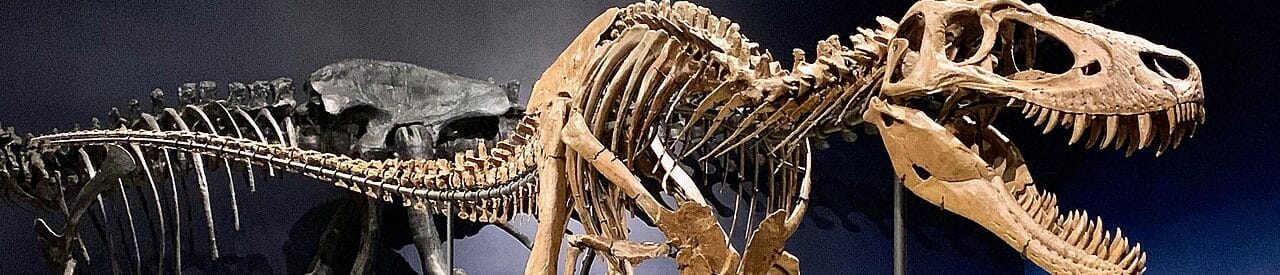
Banner image by Zissoudisctrucker – Licensed under CC BY-SA 4.0