
Rotten Tomatoes reports the percentage of critics who gave a film a positive review. These figures provide one view of how directors’ films have been received across their careers, from early breakthroughs to recent releases. The original page selected well-known, commercially successful directors and compared their ratings; this update retains its seven individual filmographies and the average-score comparison. It also looks at the proportion rated Fresh, differences between critics and audiences, and film output by decade. The charts use scored narrative films credited to each director, so a producer or acting credit alone does not make a film part of that director’s series. Ratings were checked in October 2026.
Statistics
- Average Rotten Tomatoes critics score for five prolific directors
- Martin Scorsese films by critics score, 1968–2023
- Steven Spielberg films by critics score, 1971–2026
- James Cameron films by critics score, 1982–2025
- Christopher Nolan films by critics score, 1998–2026
- Robert Zemeckis films by critics score, 1978–2024
- Ron Howard films by critics score, 1977–2024
- Peter Jackson films by critics score, 1987–2014
- Share of films rated Fresh for eight directors
- Highest-rated narrative film for each director
- Films where critics and audiences diverged most
- Recent films by the selected directors, 2020–26
- Film output by decade for the eight directors
1. Average Rotten Tomatoes critics score for five prolific directors
Martin Scorsese and Steven Spielberg continue to stand out among the prolific directors in this comparison. Their long careers combine celebrated films with few outright critical failures: Scorsese’s The Irishman and Killers of the Flower Moon both score in the 90s, while Spielberg added West Side Story and The Fabelmans after the original page was written. Ridley Scott, Ron Howard and Robert Zemeckis also have major peaks, but their wider swings pull down their career averages. The contrast reflects the original page’s interest in sustained quality over dozens of releases.
Scott’s Alien and The Martian, Howard’s Apollo 13 and Frost/Nixon, and Zemeckis’s Back to the Future and Who Framed Roger Rabbit are among the strongest entries from the other three. The bars average each director’s scored narrative films equally; they measure the share of critics giving a positive review, not the average review grade or an objective verdict on greatness. James Cameron, Christopher Nolan and Peter Jackson have fewer than 15 comparable narrative features and appear in their own film-by-film charts and the table below. These are selected major directors, rather than an exhaustive top-grossing ranking.
Sources: Rotten Tomatoes director film lists: Scorsese; Spielberg; Zemeckis; Howard; Scott and The Dog Stars
2. Martin Scorsese films by critics score, 1968–2023
Scorsese’s filmography remains remarkably strong across more than half a century. Mean Streets, Raging Bull and Goodfellas all sit above 90% in this snapshot, while Taxi Driver remains close behind. Those films established his reputation for intense character studies, crime stories and morally troubled protagonists. The 1990s and 2000s brought a broader range, from The Age of Innocence to The Departed, without ending the run of warmly reviewed releases. New York, New York and Boxcar Bertha are notable lower-scoring early exceptions.
Later successes make the longevity especially clear. The Irishman reached 95% and Killers of the Flower Moon 93%, placing both beside the highly rated films of his earlier decades. The Wolf of Wall Street and Silence found different ways to revisit ambition, faith and power. The film list focuses on narrative features so concert and other documentaries do not change the comparison with the other directors; Scorsese’s non-fiction filmmaking is itself a major part of his career. Rotten Tomatoes percentages can move as reviews are added.
Sources: Rotten Tomatoes, Scorsese films ranked
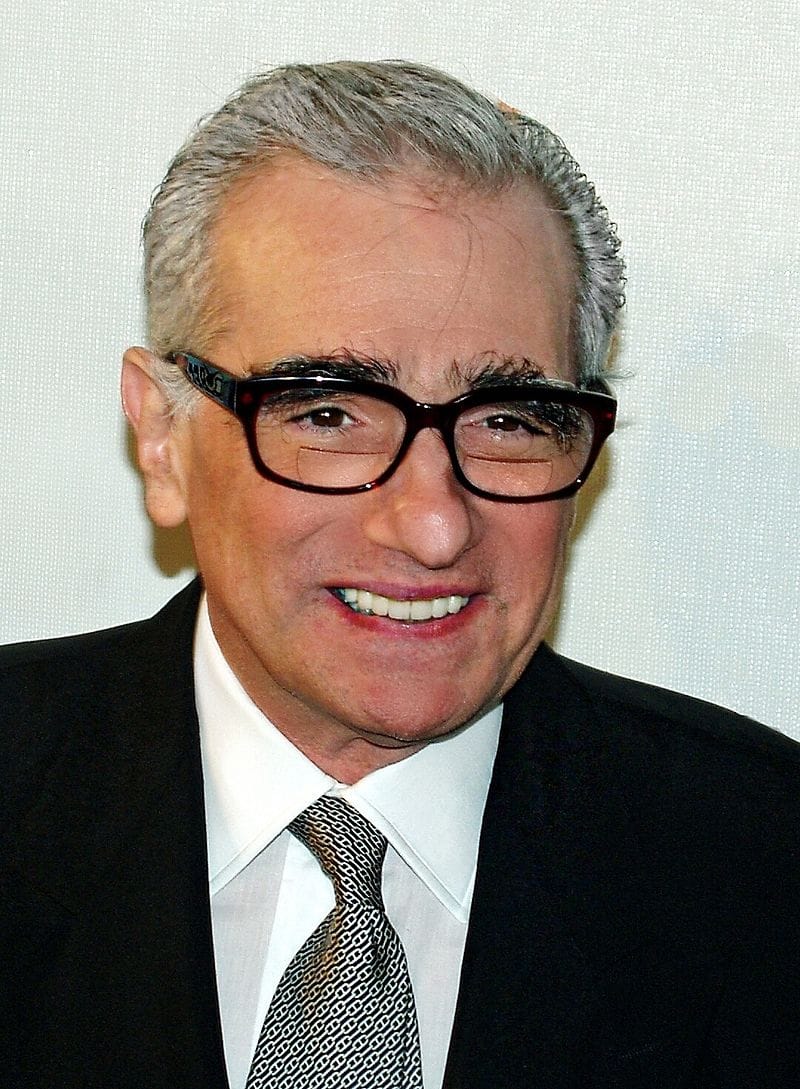
Martin Scorsese became known for intense studies of crime, guilt, ambition and morality. From Taxi Driver and Raging Bull to Goodfellas, The Departed and The Irishman, his films have shaped modern American cinema. He won the Academy Award for Best Director for The Departed after several earlier nominations, and his later work has continued to attract major critical attention.
3. Steven Spielberg films by critics score, 1971–2026
Spielberg’s best-reviewed films range from the popular suspense of Jaws to the historical gravity of Schindler’s List. E.T. is at 99%, Schindler’s List 98% and Jaws 97% in the current guide. Raiders of the Lost Ark, Saving Private Ryan and Catch Me if You Can also received strong reviews, showing the breadth of genres behind his long commercial career. The original page’s point about consistency still holds, although 1941 and Hook remain conspicuous critical lows.
His later work has strengthened the record. West Side Story reached 91% and The Fabelmans 92%, followed by Disclosure Day at 79% in 2026. Spielberg has moved between family adventure, war drama, science fiction and personal storytelling without relying on one style. Some films that audiences remember fondly did less well with critics: Hook scores 37%, whereas its audience score is far higher. This series includes the 1971 television film Duel and his segment of Twilight Zone: The Movie, as the Rotten Tomatoes Spielberg guide does; the table makes that selection explicit.
Sources: Rotten Tomatoes, Spielberg films ranked

Steven Spielberg has directed major popular films since the 1970s, beginning with Jaws and continuing through E.T., Jurassic Park and the Indiana Jones series. His dramas include Schindler’s List, Saving Private Ryan and Lincoln. That range has made him influential across several genres, combining commercial appeal with acclaimed storytelling. He won Best Director Oscars for Schindler’s List and Saving Private Ryan.
4. James Cameron films by critics score, 1982–2025
Cameron’s early Piranha II: The Spawning is a striking outlier at 4%, but the next three decades established him as a maker of ambitious science fiction and spectacle. The Terminator, Aliens and Terminator 2 all scored at least 90% in this snapshot. Their action sequences and effects helped redefine expectations for the genre, while Titanic showed that his large-scale filmmaking could also centre on romance and historical disaster. The Abyss and True Lies attracted positive, if less unanimous, reviews.
The Avatar films have extended Cameron’s technical ambitions into digital performance and world-building. The original Avatar scores 81%, The Way of Water 76%, and 2025’s Fire and Ash 66%. The downward critical sequence does not mean the films lacked an audience: Fire and Ash has a substantially higher audience percentage. Cameron has directed relatively few narrative features compared with Spielberg or Howard, so one early low can affect his arithmetic career average sharply. His documentary work is outside this narrative-film chart.
Sources: Rotten Tomatoes, Cameron films ranked, updated July 2026
5. Christopher Nolan films by critics score, 1998–2026
Nolan’s films have rarely fallen below the Fresh threshold. Memento, The Dark Knight and the 2026 Odyssey each stand at 94%, with Oppenheimer at 93% and Dunkirk at 92%. Early acclaim for Memento and Insomnia helped him make the transition from compact thrillers to the large-scale Batman trilogy. Inception and Oppenheimer then demonstrated his ability to turn complex ideas and historical material into major cinema events, retaining substantial critical approval as budgets and audiences grew.
Interstellar and Tenet are the comparatively divisive films, at 73% and 70% respectively, although each has admirers and Interstellar’s audience score is higher. The Prestige also has a larger audience following than its 77% critics figure might suggest. His latest film adds an epic mythological setting to a career already spanning noir, science fiction, superhero films, war drama and biography. Rotten Tomatoes records the percentage of positive reviews, so a 94% score signifies broad approval rather than reviewers giving a film 9.4 out of 10.
Sources: Rotten Tomatoes, Christopher Nolan films ranked, July 2026
6. Robert Zemeckis films by critics score, 1978–2024
Zemeckis’s early and middle career produced some of the most fondly remembered popular films in this group. Back to the Future sits at 93%, Who Framed Roger Rabbit at 96%, and Cast Away at 88%. The sequence moves from inventive comedy and fantasy to drama while repeatedly testing what visual effects could do within a story. Forrest Gump, at 75% with critics, has an even stronger audience score, one example of the difference between popularity and critical agreement.
The later record is much more uneven. The Polar Express and Disney’s A Christmas Carol drew mixed reviews, while Welcome to Marwen, the 2022 Pinocchio and Here all scored below 40%. The Walk and Flight were later high points, showing that the dip was not a simple one-way decline. His interest in new production techniques remains a defining trait, but the response to individual stories and performances varies. The data include scored narrative features credited to him as director, avoiding producer-only titles such as Monster House.
Sources: Rotten Tomatoes, Robert Zemeckis director credits and scores
7. Ron Howard films by critics score, 1977–2024
Howard’s career has several distinct peaks. Night Shift, Splash and Parenthood mark a strong run of early comedies, while Apollo 13 brought him broad critical praise for a tense account of the lunar mission. Frost/Nixon and Rush later showed his strength with real-life rivalry and high-pressure drama. These films received scores near or above 90%, illustrating why the original page described him as a versatile, well-regarded director rather than simply the maker of one kind of Hollywood picture.
His output has also included some poorly reviewed commercial films. The Da Vinci Code and Inferno sit at 25% and 23%, with The Dilemma and Hillbilly Elegy similarly low. Thirteen Lives reached 85% in 2022, however, showing that he has continued to make strongly received work after those setbacks. The variation is unusually large for a director with so many credits and many genres, from family fantasy to historical drama. The plotted set follows the Rotten Tomatoes 28-film guide, ending with Eden.
Sources: Rotten Tomatoes, 28 Ron Howard films ranked, August 2025
8. Peter Jackson films by critics score, 1987–2014
Jackson’s route from low-budget New Zealand horror to the largest fantasy productions is unusually clear. Bad Taste, Meet the Feebles and Braindead established an inventive, unruly style; Heavenly Creatures then reached 95% and showed a different command of character and mood. The Lord of the Rings trilogy became the peak of his blockbuster career, with all three films above 90% and The Two Towers at 95%. The Return of the King also won Best Picture at the Academy Awards.
The Hobbit trilogy had a more mixed critical response, ranging from 64% for An Unexpected Journey to 59% for The Battle of the Five Armies. The Lovely Bones was lower still at 30%, while the ambitious King Kong remake scored 84%. This pattern largely preserves the original analysis: early experimentation, a major ascent through Middle-earth, and less uniform reviews afterwards. Jackson has also directed acclaimed documentaries, including They Shall Not Grow Old, but this chart follows his narrative-film career for comparability.
Sources: Rotten Tomatoes, Jackson director filmography; Rotten Tomatoes, Heavenly Creatures
9. Share of films rated Fresh for eight directors
Nolan has a perfect Fresh record among his 13 features in this selection, from Following through The Odyssey. Scorsese also has an exceptionally high share across 26 films, despite the weaker reviews for Boxcar Bertha and New York, New York. Spielberg combines a high Fresh share with the largest number of films among the original seven director-by-film subjects. This makes his consistency particularly notable: sustaining broad approval across several decades and genres is different from making a shorter run of acclaimed films.
Cameron’s percentage is pulled down by Piranha II, while his newer Avatar sequels remain on the Fresh side of the line. Zemeckis, Howard and Scott have more extensive runs of mixed or negative reviews. The threshold is Rotten Tomatoes’ 60% convention, which puts a film with 59% on the opposite side of a binary line from one with 60%. It is useful for seeing consistency alongside the mean scores, though it cannot capture how enthusiastically critics liked the Fresh films. The chart includes eight selected directors, adding Scott to the seven individual filmographies.
Sources: Rotten Tomatoes director lists and credited filmographies; Ridley Scott ranked films
10. Highest-rated narrative film for each director
E.T. is the standout here at 99%, followed by Who Framed Roger Rabbit at 96%. Scorsese’s The Irishman and Jackson’s Heavenly Creatures each reach 95%. Nolan’s highest score is shared by Memento, The Dark Knight and The Odyssey at 94%; the chart labels one of those ties. Cameron’s Aliens, Howard’s Frost/Nixon and Scott’s Alien are also near the top. These are very different films, from family fantasy and animation to science fiction, historical drama and a gangster epic.
A single highest-rated film can reveal a director’s creative peak without describing the whole career. Zemeckis’s Roger Rabbit leads his far more uneven recent filmography, whereas Nolan has several titles close to his maximum. Scorsese’s top narrative entry is from 2019 rather than his early 1970s period, a reminder that artistic reputations can grow and renew over decades. Because the scores are positive-review percentages, close ranks do not settle a question of which work is “best”; the bar identifies the most broadly approved title in this defined set.
Sources: Rotten Tomatoes, eight director film lists; Heavenly Creatures film page
11. Films where critics and audiences diverged most
A director’s critical reputation and audience appeal do not always move together. Some Spielberg films, especially Hook, are far more popular with viewers than their critics percentages suggest. Jackson’s King Kong moves in the opposite direction: critics were more positive than the audience score. Cameron’s Titanic and Zemeckis’s Forrest Gump show that enormous cultural reach can coexist with a more divided critical verdict. These gaps bring out differences in taste that a chart of critics scores alone can conceal.
The largest differences in this selection often involve family adventure, spectacle or an adaptation whose reception changed after release. A high audience score may reflect enduring affection, while critics score a film amid its initial release and may respond differently to pacing or style. These are separate percentages collected from different groups rather than two measurements from the same sample, so the gap is descriptive. Ron Howard and Ridley Scott are omitted here because the guides used for their film-by-film critics series did not supply a complete parallel audience column.
Sources: Rotten Tomatoes director film pages, critics and audience percentages
12. Recent films by the selected directors, 2020–26
The newer releases show several veteran directors still capable of strong critical work. Nolan’s The Odyssey and Oppenheimer, Scorsese’s Killers of the Flower Moon and Spielberg’s The Fabelmans all score above 90%. Spielberg’s West Side Story is close behind. This recent cluster counters the idea that their acclaimed films belong only to an earlier era. It also shows how different routes to acclaim remain open: intimate autobiography, historical drama, crime epic, mythic adventure and musical adaptation.
At the lower end, Zemeckis’s Pinocchio and Here and Scott’s The Dog Stars met much cooler reviews. Cameron’s Avatar sequels received positive but less unanimous critical responses than his earlier action films. Nolan’s Tenet was also more divisive than his 2023 and 2026 releases. The range makes a simple generational decline implausible; the same period contains both career highlights and difficult receptions. This is a selection of films by the eight named directors, rather than a measure of every film released in the 2020s.
Sources: Rotten Tomatoes, director filmographies and 2026 releases; The Dog Stars, current film score
13. Film output by decade for the eight directors
The combined careers gained momentum from the 1970s and became especially productive in the 1980s, 1990s and 2000s. Spielberg and Scorsese were central to the New Hollywood generation, while Cameron, Zemeckis, Howard and Scott expanded the mix of large-scale popular cinema. Jackson’s early features appeared before his Lord of the Rings run, and Nolan’s first film arrived in the late 1990s. The decade pattern thus traces the overlap of different careers, not one director’s rise or fall.
The 2010s still contained a substantial body of work, from Hugo and Dunkirk to the Hobbit films and The Martian. The 2020s bar is smaller partly because the decade is unfinished as of October 2026, and several of these filmmakers work on longer production cycles. Screen count and box-office scale are absent from this view: a two-film decade could still have an enormous cultural impact. Counting titles adds context to the first chart, where a high average across many releases represents a different achievement from a high average across ten.
Sources: Rotten Tomatoes, dated directed-film lists for eight directors
Data table
Average critics percentages and Fresh counts for the eight selected directors. Each scored narrative title contributes once; the table is editable Gutenberg content.
| Director | Films | Average critics score | Fresh films | Latest included film |
|---|---|---|---|---|
| Christopher Nolan | 13 | 86.5% | 13/13 | The Odyssey (2026) |
| Martin Scorsese | 26 | 82.6% | 24/26 | Killers of the Flower Moon (2023) |
| Steven Spielberg | 36 | 79.6% | 32/36 | Disclosure Day (2026) |
| Peter Jackson | 13 | 75.8% | 11/13 | The Hobbit: The Battle of the Five Armies (2014) |
| James Cameron | 10 | 74% | 9/10 | Avatar: Fire and Ash (2025) |
| Robert Zemeckis | 22 | 66.7% | 14/22 | Here (2024) |
| Ron Howard | 28 | 62.3% | 15/28 | Eden (2024) |
| Ridley Scott | 30 | 61.7% | 16/30 | The Dog Stars (2026) |
Other pages
- Number of Cinemas by Country
- Solo Oscar Winners
- Best Picture Oscars
- Oscars versus Cannes
- Highest Grossing Movies 1950–2018
- Most Expensive Movies
- Film Violence
- Film Villains
Sources
- Rotten Tomatoes, Scorsese ranked films
- Rotten Tomatoes, Spielberg ranked films
- Rotten Tomatoes, Cameron ranked films
- Rotten Tomatoes, Nolan ranked films
- Rotten Tomatoes, Zemeckis filmography
- Rotten Tomatoes, Ron Howard ranked films
- Rotten Tomatoes, Peter Jackson filmography
- Rotten Tomatoes, Ridley Scott ranked films
- Rotten Tomatoes, The Dog Stars
- Rotten Tomatoes, Heavenly Creatures
- Portraits: Martin Scorsese by David Shankbone, CC BY-SA 3.0; Steven Spielberg by Alan Light, CC BY 2.0. Banner photograph: Alexander Obreshkov by Inventis, CC BY-SA 4.0 (existing featured image).