INTRODUCTION
The following charts show the region of birth of British Prime Ministers. Different regions produce Prime Ministers at a different rate and this depends on time and party. It shows where power is concentrated, the political culture of different regions. The table below shows information about about 20th and 21st century Prime Ministers including their degree, pre-political occupation and place of birth.
Charts
1. Mori / University of Leeds Academic Rating of British Prime Ministers 1895-2004
2. Region of Birth of British Prime Ministers
3. Number of Prime Ministers by Party and Region
4. Number of Prime Ministers by Region and Period
5. List of Living Former Prime Ministers by Popularity
Data Table
6. 20th/21st Century British Prime Ministers by Party, Region of Birth, Degree and Other Occupation(s)
The chart presents MORI/University of Leeds academic ratings of British Prime Ministers from 1895 to 2004. Clement Attlee ranks highest, reflecting his transformative post-war government, which established the National Health Service, expanded the welfare state, and oversaw major nationalisations. Winston Churchill and David Lloyd George also score highly due to their leadership during wartime and periods of reform.
At the lower end, Anthony Eden receives the weakest rating, largely because of the 1956 Suez Crisis, which damaged Britain’s international standing and curtailed his premiership. Overall, Conservative Prime Ministers appear more frequently toward the lower half of the rankings, suggesting weaker average evaluations compared to Labour and Liberal leaders. Labour figures, particularly Attlee and Harold Wilson, perform strongly, while Liberal leaders also rank relatively well. The chart therefore indicates that, in academic assessments, Labour and Liberal Prime Ministers tend to receive higher average historical evaluations than their Conservative counterparts.
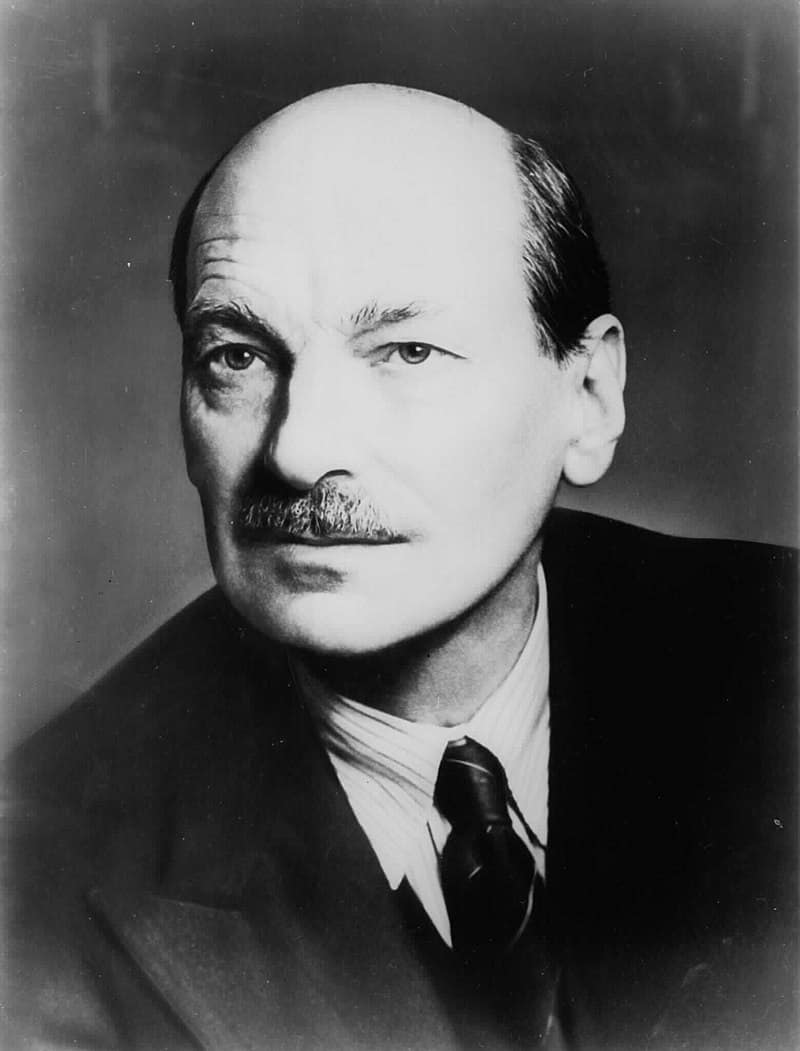
Clement Attlee was Prime Minister of the United Kingdom from 1945 to 1951 and is widely considered one of the greatest British prime ministers. Leading the post-war Labour government, he introduced sweeping reforms that transformed the country. His administration established the welfare state, including the creation of the National Health Service (NHS), expanded social security, and nationalised key industries. Known for his quiet, pragmatic leadership style, Attlee contrasted sharply with more charismatic figures but delivered lasting change. His government reshaped British society and laid the foundations for modern public services and improved living standards.
London, which has been the centre of political power in the UK for centuries, is by far the leading region of birth of UK Prime Ministers with 31% of all Prime Ministers born in London. This is well ahead of it’s share of the UK population over the period. This was particularly true before the 20th century when it was the region of birth of 41% of Prime Ministers. Pre-20th century Britain was even more centred around London than today. As ease of travel has increased in the 20th century, more Prime Ministers have been born outside of London. Only 1 of the last 9 Prime Ministers, David cameron, was born in London.
Notable is the lack of Prime Ministers born in the north of England. A significantly larger percentage of Prime Ministers were born in the Northwest before the turn of the 20th century compared to after, including William Gladstone. 2 Prime Ministers have been born outside the UK, both in North America. The current Prime Minister, Boris Johnson, was born in New York City, USA. The other was Bonar Law, a Tory Prime Minister between 1922 and 1923, who was born in Canada. Both moved to the UK as children.
Quite remarkably, there has yet to be a British Prime Minister born in Wales. David Lloyd George is generally regarded as a Welshman though. Although he was born in Manchester, his parents were Welsh and spoke Welsh as a first language. There has also yet to be a Prime Minister born in Northern Ireland. However, 2 Prime Ministers were born in Ireland during the 19th century when the whole of Ireland was part of the UK. They were William Petty and Arthur Wellesley, 1st Duke of Wellington.
4 of the Prime Ministers born in the Southeast were from the Conservative party which reflects their strength in the region. Britain’s most famous Prime Minister, Winston Churchill, was born in the Southeast at Blenheim Palace in Oxfordshire. Both of the last 2 Labour Prime Ministers, Gordon Brown and Tony Blair, were born in Scotland although Tony Blair was primarily raised in England. The majority of 20th/21st century Scottish born Prime Ministers are from the Labour Party.
There were 20 British Prime Ministers in the 19th century. 10 were born in London. In the first half of the 19th century, the Tory and Whig party were dominant. In the 2nd half, the Conservative (now often called Tories) and Liberal Party became dominant. In the 20th century, Scotland and the Southeast have overtaken London as the region of birth of most Prime Ministers. The wealthy Southeast region has been by far the most common region of birth of Prime Ministers after the second world war. 5 out of 13 postwar Prime Ministers were born in the Southeast. This reflects the often mentioned complaint that there is too much power in the Southeast of England.
Note: Although Robert Gascoyne-Cecil completed the last of his 3 terms in 1902, he is counted as a pre-20th century Prime Minister since he served the vast majority of his nearly 14 years as PM in the 19th century.
This chart shows that public opinion of living former UK Prime Ministers is generally quite negative, with most figures having significantly higher “disliked” than “liked” ratings. Liz Truss is particularly unpopular, reflecting a brief turbulent period in office with lasting negative consequences. Even longer-serving figures like Tony Blair and David Cameron remain quite unpopular, mainly due to particular policy decisions seen as catastrophic disasters – the Iraq war in the case of Blair and Brexit in the case of Cameron.
Notably, Gordon Brown and John Major stand out as relatively balanced, being viewed almost as positively as negatively—an uncommon position among living former PMs.
More broadly, British attitudes toward former leaders tend to be harsher and less forgiving than in the United States, where former presidents often see their reputations improve over time. In the UK, political divisions and media scrutiny tend to leave more lasting negative impressions, resulting in persistently low approval ratings even after leaving office.
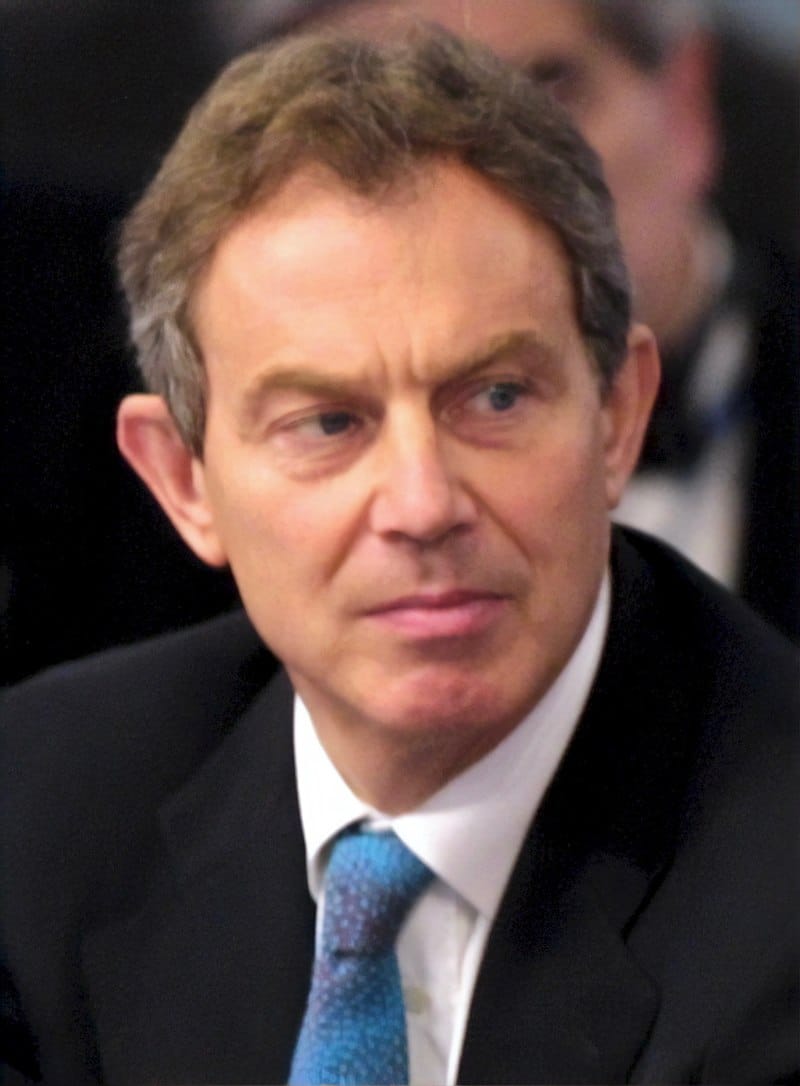
Tony Blair served as Prime Minister of the United Kingdom from 1997 to 2007, leading the Labour Party to three consecutive election victories. He introduced major reforms in public services and played a key role in the Northern Ireland peace process. However, his decision to support the Iraq War remains highly controversial and has significantly affected his reputation. In the UK today, Blair’s popularity is mixed, with some recognizing his domestic achievements while others remain critical of his foreign policy decisions, leaving him a divisive figure in modern British political history.
This chart shows the range of heights among postwar UK Prime Ministers, which varies quite significantly, generally between around 5’5” and 6’1”. While there are some taller figures such as Tony Blair and David Cameron, there is no consistent trend toward taller leaders over time. Shorter leaders like Margaret Thatcher and Winston Churchill were also highly successful, suggesting height has little bearing on political success in the UK.
One reason for this is institutional. Unlike in the United States, where presidents are both head of government and head of state, UK Prime Ministers are not heads of state. This may reduce the importance of physical stature and presence compared to countries like the United States, where presidents have historically tended to be taller and more physically imposing.
Overall, the chart suggests that in the UK, leadership effectiveness and political skill matter far more than physical characteristics like height.
6. 20th/21st Century British Prime Ministers by Party, Region of Birth, Degree and Other Occupation(s)
OTHER PAGES ABOUT POLITICS & WORLD AFFAIRS
Source:
Charts created using OpenOffice Calc.