
INTRODUCTION
A century in snooker is a score of 100 or more points with one visit to the table. It requires a great deal of skill and practice to consistently make century breaks. A snooker player’s century rate reflects their potting and positional ability. Centuries per frame won helps cross-era comparison by focusing only on frames a player actually wins, reducing inflation from weaker opposition and uneven matches, and emphasising how often players convert winning frames into decisive, high-scoring clearances. This page shows statistics about snooker centuries including which players have the highest century rates and how the number of players making centuries has changed over time.
Statistics
1. Percentage of Centuries in Frames Won by Season as Pro for 4 Biggest Century Makers (Line Graph)
2. Peak Season Centuries Per Frames Won for 10 Biggest Century Makers (Bar Chart)
3. Number of Players to Make a Century by Decade (Stacked Column Chart)
4. Top 20 century makers in each decade by nationality (Stacked Column Chart)
5. Players with Most Centuries in 1990s (Bar Chart)
The above graph shows the century per frames won percentage of the 5 biggest century makers of all time.
Widely considered snookers greatest ever players, Ronnie O’Sullivan has the strongest record overall although Neil Robertsons last 2 seasons are the better than of any of O’Sullivans in this metric. O’Sullivans century making seems to have plateaued but he could easily come back and surpass Robertson. Such is his greatness in the sport. Aside from having the 2 best performances, Neil Robertson also shows the most dramatic rise.
Judd Trump, the youngest player on the graph, seems to be on the way up although the last season seen a dramatic dip in century making. It’s most probably a blip and unlikely to the beginning of a pattern of decline.
Stephen Hendry’s performance stands the test of time and doesn’t look out of place among the newer players. He would certainly have been among the top players in the modern game, judging from his century making ability.
John Higgins shows a unique pattern of resurgence after a decline. This is also reflected in his success in terms of getting to finals and winning.
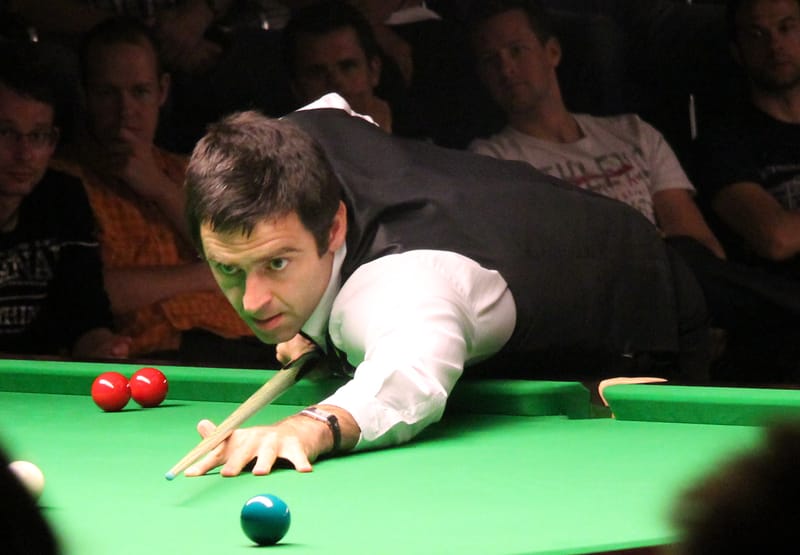
Ronnie O’Sullivan is widely regarded as the most naturally talented player in snooker history. Known for his speed and precision, he has won multiple World Championships and numerous major titles. O’Sullivan is famous for his extraordinary century-making ability, compiling more centuries than any other player. He also holds the record for the most maximum 147 breaks in professional competition. His unique style, including ambidextrous play, and his dominance over decades have made him one of the sport’s most iconic and influential figures.
Image: Ronnie O’Sullivan at the Paul Hunter Classic in 2011
This chart compares the single best season of each of the ten highest century makers in snooker history, measured by century breaks per frame won. The standout result belongs to Neil Robertson, whose 2020/21 season was not only the best among these elite players but dramatically ahead of the rest. His century rate exceeded 31%, meaning he made a century break in nearly one out of every three frames he won, an extraordinary level of scoring consistency that illustrates how modern snooker has reached unprecedented standards of break-building.
The chart also highlights the broader trend toward heavier scoring in the modern era. Most of the highest rates belong to players whose peak seasons came in the 2010s or 2020s, reflecting improved equipment, playing conditions, and increasingly aggressive tactical approaches.
Perhaps the most remarkable feature, however, is the presence of John Higgins and Mark Williams near the bottom of the chart. Their best century-scoring seasons occurred in 2021/22 despite both having turned professional in 1992. More than thirty years into their careers, they were producing the highest scoring rates of their lives. This remarkable longevity helps explain why the famous Class of 92 remains competitive at the highest level. As of the end of the 2024/25 season, the chart demonstrates both the evolution of scoring standards in snooker and the extraordinary durability of some of the sport’s greatest players.

Judd Trump is one of the leading players of the modern era, known for his flair, creativity, and attacking style. Rising to prominence with his 2019 World Championship victory, Trump has consistently been among the top-ranked players in the world. He is especially renowned for his prolific century-making, compiling hundreds of centuries across seasons and often leading yearly century tallies. His ability to score heavily and quickly makes him a constant threat in any match. Trump’s entertaining style and high break-building have helped bring a new level of excitement to professional snooker.
Image: Judd Trump at the 2014 German Masters
This chart presents an interesting picture of snooker’s evolution. Although most observers would agree that the very highest standard of play has increased in the 21st century—with players making centuries more frequently and compiling larger breaks—the total number of players making century breaks appears to have been higher in the 1990s. In particular, the number of players recording between one and nine centuries was substantially greater during that decade.
One possible interpretation is that the strength in depth of professional snooker was actually greater in the 1990s than it is today. The era featured a remarkable concentration of talent, including established stars such as Stephen Hendry, Jimmy White and John Parrott, alongside emerging talents from the famous Class of 92.
However, there may be other explanations. Changes in tour structure, qualification systems, ranking events, and the number of professional players could all influence these figures. Further investigation would be needed to determine the exact cause. Nevertheless, it is undeniable that the 1990s was a particularly strong era of snooker. The continuing success of Ronnie O’Sullivan, John Higgins, and Mark Williams more than three decades after turning professional provides compelling evidence of the exceptional quality of that generation.
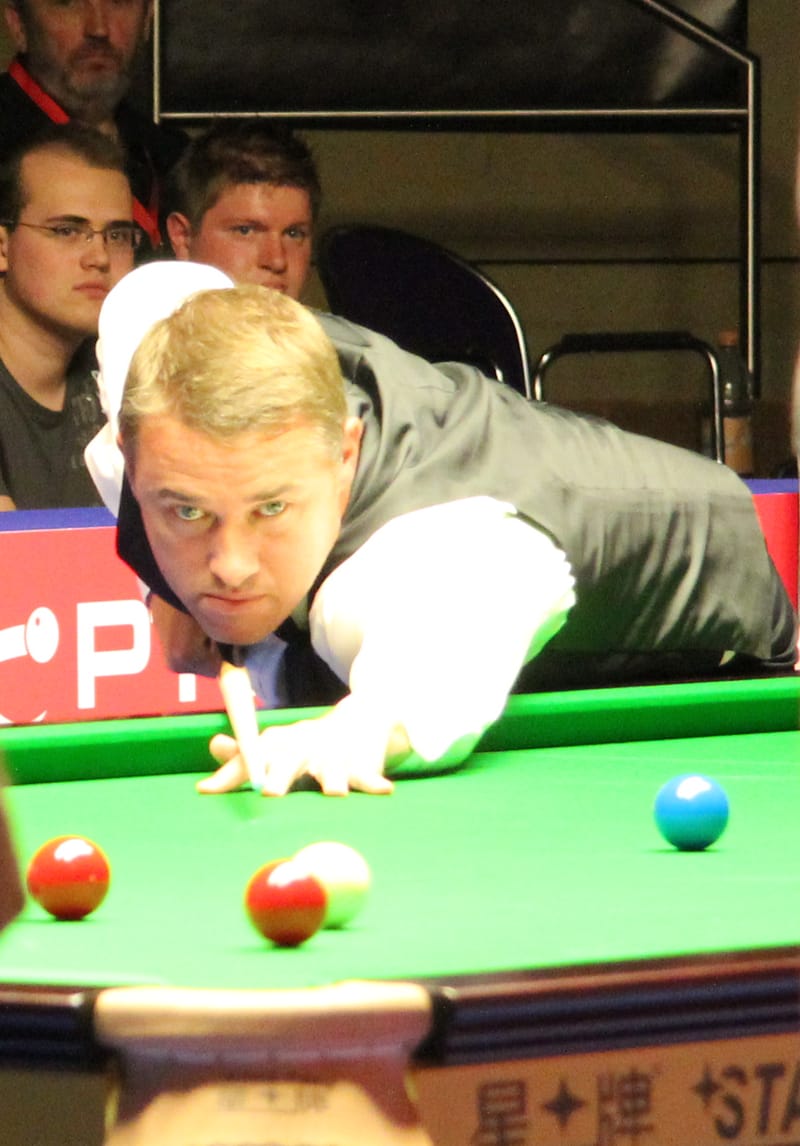
Stephen Hendry is widely regarded as one of the greatest snooker players of all time. Dominating the sport in the 1990s, he won seven World Snooker Championship titles and set new standards for professionalism and consistency. Hendry was particularly known for his exceptional break-building ability, compiling hundreds of century breaks during his career. His aggressive, attacking style helped popularize a more modern approach to the game. By regularly producing high-scoring frames and centuries under pressure, he established a legacy that influenced future generations and cemented his place among snooker’s all-time greats.
Image: Stephen Hendry at the Paul Hunter Classic in 2011
This chart illustrates both the persistence of British dominance in snooker and the gradual internationalisation of the sport. In every decade shown, English players account for the majority of the top 20 century makers, reflecting the fact that snooker developed in Britain and continues to have its deepest talent pool there. Scotland and Wales also contribute consistently, producing legendary players such as Stephen Hendry, John Higgins, and Mark Williams.
There has undeniably been a globalisation of snooker in the 21st century. The emergence of players from China, Hong Kong, Thailand, Australia, and elsewhere reflects the sport’s growing international appeal. In particular, Ding Junhui played a transformative role in popularising snooker in China and inspiring a new generation of players.
However, the shift has not been as dramatic as many predicted. Although the last two world champions have been Chinese, British players still dominate the professional ranks. Indeed, while the 2020s are not shown because the decade is still ongoing, as of mid-2026, 15 of the top 20 century makers of the decade are British. The key question for the future is whether China’s growing player base and investment in the sport will eventually make it the outright dominant nation in snooker, or whether Britain will retain its long-established position at the top.
This chart highlights the extraordinary dominance of Stephen Hendry during the 1990s. His total of more than 400 century breaks is over twice that of the next player, Ronnie O’Sullivan, underlining just how far ahead of his contemporaries he was. Hendry revolutionized professional snooker with an aggressive, attacking style that emphasized heavy scoring and relentless break-building, helping to usher in a new era of the sport.
The 1990s saw a broader rise in attacking snooker, with players increasingly focusing on compiling large breaks rather than relying solely on tactical safety play. The high century totals across the chart reflect this shift. The decade also represented a crossroads between snooker generations. Established stars from the 1980s boom years, such as Jimmy White, Steve Davis, and John Parrott, were still competing at the highest level, while members of the famous “Class of 92″—O’Sullivan, John Higgins, and Mark Williams—were beginning their rise. Remarkably, players from that generation continue to rank among the world’s best more than three decades later, making the 1990s one of the most significant transitional periods in snooker history.
OTHER PAGES ABOUT SPORT AND tactical games
Image Credits:
Banner Image (German Masters Snooker Final) by DerHexer – Licensed Under Creative Commons Attribution-Share Alike 4.0
Ronnie O’Sullivan at the Paul Hunter Classic in 2011 by Benutzer:Bill da Flute – Licensed Under CC BY-SA 3.0
Judd Trump at the 2014 German Masters by Martin Rulsch – Licensed Under CC BY-SA 4.0
Stephen Hendry at the Paul Hunter Classic in 2011 by Benutzer:Bill da Flute – Licensed Under CC BY-SA 3.0