
INTRODUCTION
The Best Picture Oscars are considered to be the ultimate prize in cinema. This page looks at the movies which won or were nominated for the award and how they have changed over time.
Statistics
1. Genre of Oscar Nominated Films by Decade 1950s – 2010s (Stacked Column Chart)
2. Highest Grossing Best Picture Oscar Winners & Nominees in North America Adjusted by Ticket Price (Bar Chart)
3. Best Picture Oscar Winner by Ticket Price Adjusted Gross Revenue in North America by Year 1950 – 2018 (Line Graph)
4. Best Picture Oscar Winner by Inflation Adjusted Worldwide Gross Revenue by Year 1989 – 2018 (Line Graph)
5. Best Picture Oscars by Film Production Company/Distributor (Bar Chart)
6. Inflation Adjusted Revenue, Genre and Source for Best Picture Oscar Award Winners and Nominees 1950 – 2018 (Data Table)
Prior to the 1970s, musicals were common among Best Picture nominated films. Since 2000, there has been a slight return of musicals including Chicago and La La Land but nothing like before the 1970s. This reflects the number of such musicals produced and their popularity.
Increasingly non-fiction movies have become dominant among Best Picture nominated films. The 2010s have been a particularly strong decade for non-fiction movies with non-fiction movies being over 40% of Best Picture nominees and 5 of the 9 Best Picture winners in the decade so far including 12 Years a Slave and Spotlight. This is a huge difference from the 1950s when movies based in true stories such as “The Diary of Anne Frank” were a small percentage of Best Picture nominees. Far more movies in the 1950s which were based on theatrical productions such as Cat on a Hot Tin Roof. Contemporary dramas such as 12 Angry Men were far more common among Best Picture nominees in the 50s than today.
Science fiction movies such as Gravity and The Martian have in recent years received far more nominations for Best Picture than in the past, likely reflecting a greater number of Sci-Fi films being produced and changing attitudes towards them. Contemporary dramas have consistently been represented throughout all periods from the 1950s to the present (and likely before) although more so in the 1950s than presently. Superhero movies, which often dominate at the box office, have only received 1 nomination. This was for Black Panther in 2018. Comedy films, which had a solid representation from the 1950s to the 1990s, seem to have declined in the 20th century although it’s far from unusual for a comedy film to receive a best picture nomination. 2018 was a particularly good year for comedy films with 3 of the 7 nominees being comedy films based on real events including the winner Green Book.
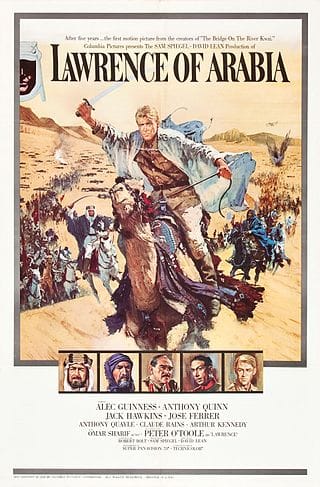
Lawrence of Arabia, an epic historical drama, won the Best Picture Oscar in 1962.
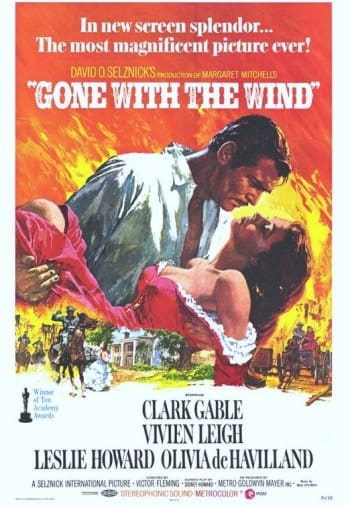
Gone with the Wind is the highest grossing movie of all time after adjusting for inflation. This is partly due to it being released multiple times. The above image is the poster for the 1967 re-release.
The chart above shows the highest grossing Best Picture nominated films of all time in North America, adjusted for ticket price inflation.
The civil war epic, Gone with the Wind, is by far the highest grossing film of all time in North America after adjusting for ticket price inflation. Gone with the Wind had numerous releases, firstly in 1940, which helped it amass it’s total sales. Star Wars is second and The Sound of Music is in a close third among Best Picture nominated films. Only 2 movies from the 90s, Titanic and Forrest Gump, are in the top 20. Avatar and Black Panther are the only two 21st century Best Picture nominated films to make the top 20. In recent years, it has become less common for the highest grossing films to be nominated or win the Best Picture award. Also films made nowadays receive a much larger proportion of revenue from overseas markets compared to older movies.
When looking at worldwide inflation adjusted gross, recent movies tend to do better with James’s Cameron’s movies Avatar and Titanic 2nd and 3rd respectively. Gone with the Wind, however, is also the highest worldwide. It’s worth noting that the world population has grown significantly, as has global income per capita, so the global market for movies is far bigger. As such, more recent films have a much bigger advantage than movies from the mid 20th century.