
Rio de Janeiro hosted the first Olympic Games held in South America in 2016. The opening ceremony took place on 5 August and the closing ceremony on 21 August, with football beginning two days earlier. The programme contained 306 events across 28 sports, including rugby sevens and the return of golf. The United States led the medal table, while host Brazil won nineteen medals. Twelve charts explore regional patterns, national collections, Brazilian performances, selected champions and competition dates, followed by a reference table covering all 86 medal-winning delegations.
Regional groups are editorial, not official Olympic categories. Eastern Europe / former USSR includes the former Soviet republics in Central Asia and the Caucasus. Gymnastics combines artistic, rhythmic and trampoline events; cycling includes track, road, mountain bike and BMX. Swimming combines pool and marathon events. Independent Olympic Athletes represents athletes from Kuwait and is grouped with the Middle East / N. Africa. Team medals count once per delegation and event. The Games produced 306 gold, 307 silver and 359 bronze awards.
Statistics
- Medals by region and sport
- Gold medals by world region
- Athletics gold medals by region
- Wrestling gold medals by region
- Swimming gold medals by region
- Gymnastics gold medals by region
- Cycling gold medals by region and discipline
- Leading national medal totals
- Gold medals against total medals
- Brazil’s medals by discipline
- Selected champions: medal collections
- Competition dates for four featured disciplines
- Rio 2016 medal reference table
1. Medals by region and sport
AthleticsWrestlingSwimmingGymnasticsCyclingBoxingOther sports
The regional stacks divide Rio’s 972 recorded medal-table awards between six featured sports and the rest of the programme. Western Europe includes Great Britain, Germany, France and several other substantial medal winners. North America combines the United States and Canada, while the Latin American and Caribbean group includes host Brazil. Comparing the coloured segments reveals different sporting profiles within those overall collections.
Swimming combines pool and marathon events. Gymnastics includes artistic, rhythmic and trampoline competitions, while cycling combines track, road, mountain bike and BMX. Boxing is retained as a useful additional table category even though it did not have a separate chart on the original Rio page. The grey segment contains all remaining sports, including the returning golf competition and newly introduced rugby sevens. Team and relay medals count once per delegation and event. These mutually exclusive categories reconcile with the reference table. Regional definitions are editorial, with former Soviet republics included in the broad eastern group; they are not official Olympic classifications.
Source: Olympedia, Rio 2016. Team and relay medals count once per delegation and event. Ties and subsequent medal revisions are retained; non-medal events are excluded.
2. Gold medals by world region
E. Europe / ex-USSR — 56N. America — 50W. Europe — 89East Asia — 50Oceania — 13Sub-Saharan Africa — 10M. East / N. Africa — 7Latin Am. / Carib. — 26Southeast Asia — 5
Western Europe won 89 gold medals, followed by Eastern Europe and the former Soviet republics with 56. North America and East Asia each contributed fifty. Latin America and the Caribbean supplied 26, Oceania thirteen, Sub-Saharan Africa ten, the Middle East with North Africa seven, and Southeast Asia five. South Asia won medals but no golds, so it has no slice in this chart.
Great Britain’s 27 victories were the largest national contribution to Western Europe, while the United States supplied 46 of North America’s fifty. China and Japan contributed 26 and twelve respectively to East Asia. The pie describes the distribution of recorded gold awards rather than the proportion of athletes or participating countries. Its 306-award denominator reflects the source’s revised results, including ties and subsequent changes. Smaller slices remain meaningful: Southeast Asia’s victories came from several different national teams. Silver and bronze achievements appear in the opening chart and reference table, giving readers a broader view than the gold-only composition alone.
Source: Olympedia, Rio 2016. Team and relay medals count once per delegation and event. Ties and subsequent medal revisions are retained; non-medal events are excluded.
3. Athletics gold medals by region
North America won fourteen athletics gold medals, with the United States supplying thirteen and Canada one. Sub-Saharan Africa and Latin America with the Caribbean each contributed nine. Western Europe followed with seven, the eastern group five, East Asia two, and the Middle East with North Africa one. These seven bars account for all 47 athletics titles.
Usain Bolt won the 100 metres, 200 metres and sprint relay, contributing three of Jamaica’s six athletics golds. The photograph below shows him before a 200 metres heat, connecting the regional result with the competition itself. Kenya supplied six Sub-Saharan African victories, while Great Britain contributed two Western European titles through Mo Farah’s distance double. Brazil’s Thiago Braz won the pole vault, adding a home title to the Latin American and Caribbean total. A relay counts once nationally despite involving several champions. The bars use one blue because they rank a single measure. Other podium finishes remain available in the athletics total-medal column of the reference table.
Source: Olympedia, Rio 2016. Team and relay medals count once per delegation and event. Ties and subsequent medal revisions are retained; non-medal events are excluded. Athletics: 47 gold awards.

Usain Bolt prepares for a 200 metres heat at Rio on 16 August 2016. He went on to win the event, adding to his 100 metres and sprint-relay victories. Those three titles contributed half of Jamaica’s six athletics golds and three of the nine won by Latin America and the Caribbean in the chart above. This photograph shows an earlier round rather than the final. Each event contributes one national gold, while the relay title is also credited personally to his teammates. His three-gold collection appears later among the selected champions, linking the regional pattern with an individual athlete’s results.
4. Wrestling gold medals by region
E. Europe / ex-USSR — 7N. America — 3East Asia — 4M. East / N. Africa — 2Latin Am. / Carib. — 2
Eastern Europe and the former Soviet republics led wrestling with seven gold medals. East Asia collected four, all through Japan, and North America supplied three. The Middle East with North Africa and Latin America with the Caribbean each contributed two. Russia supplied four of the eastern group’s titles, with Armenia, Georgia and Serbia adding one apiece.
Rio’s eighteen events comprised six men’s freestyle classes, six Greco-Roman classes and six women’s freestyle classes. The women’s programme therefore contained two more events than in London, while each men’s discipline had one fewer. Japan won three women’s titles and one men’s freestyle title. The United States contributed two North American golds and Canada one, while Cuba supplied both Latin American and Caribbean victories. Iran and Turkey each won a title in the stated Middle Eastern and North African grouping. The pie shows event wins, not unique champions across all sports. Two bronze medals were awarded per wrestling event, so overall podium totals require a separate count rather than multiplying golds by three.
Source: Olympedia, Rio 2016. Team and relay medals count once per delegation and event. Ties and subsequent medal revisions are retained; non-medal events are excluded.
5. Swimming gold medals by region
E. Europe / ex-USSR — 4N. America — 17W. Europe — 7East Asia — 3Oceania — 3Southeast Asia — 1
North America collected seventeen swimming gold awards: sixteen for the United States and one for Canada. Western Europe supplied seven, the eastern group four, East Asia and Oceania three each, and Southeast Asia one. The combined total is 35 gold awards across 34 events, because Simone Manuel and Penny Oleksiak shared victory in the women’s 100 metres freestyle.
The chart includes the 32 pool events and both marathon swims, keeping swimming’s scope consistent throughout the page. The Netherlands won both open-water titles through Sharon van Rouwendaal and Ferry Weertman, adding two to Western Europe’s five pool golds. Hungary’s Katinka Hosszú won three titles, forming most of the eastern group’s gold collection. Singapore’s Joseph Schooling supplied Southeast Asia’s victory in the 100 metres butterfly. Michael Phelps and Katie Ledecky contributed five and four American golds respectively, although personal relay credits must not be added together to calculate national totals. Diving, water polo and artistic swimming remain outside this category and are included among other sports.
Source: Olympedia, Rio 2016. Team and relay medals count once per delegation and event. Ties and subsequent medal revisions are retained; non-medal events are excluded.
6. Gymnastics gold medals by region
E. Europe / ex-USSR — 5N. America — 5W. Europe — 5East Asia — 3
North America, Western Europe and the eastern group each won five gymnastics gold medals, while East Asia collected three. The eighteen titles combine fourteen artistic events, two rhythmic events and two trampoline events. This produces a more evenly divided regional picture than a chart focused on one discipline or one famous athlete alone.
Simone Biles won all four American golds, while Canada’s Rosie MacLennan supplied North America’s trampoline title. Western Europe’s victories came through Great Britain, Germany, the Netherlands and Greece. Russia, Ukraine and Belarus contributed to the eastern group, while Japan and North Korea supplied East Asia’s titles. The photograph below shows Biles during the women’s artistic team final, one of her four winning events. A team victory counts once for the delegation even though several gymnasts receive personal gold medals. The doughnut therefore measures national event victories rather than the number of gold medals physically presented to athletes. The reference table also preserves silver and bronze results for delegations that reached podiums without winning titles.
Source: Olympedia, Rio 2016. Team and relay medals count once per delegation and event. Ties and subsequent medal revisions are retained; non-medal events are excluded. Artistic, rhythmic and trampoline gymnastics combined.

Simone Biles is pictured during the women’s artistic gymnastics team final on 9 August 2016. The United States won that event, and Biles added individual golds in the all-around, vault and floor exercise, plus bronze on the balance beam. Her four victories supplied four of North America’s five gymnastics golds in the chart above. The remaining regional title came through Canadian trampolinist Rosie MacLennan. The team gold counts once nationally, even though each member receives personal credit. This distinction connects Biles’s five-medal collection with the smaller number of event awards used in the regional chart and national reference table.
Fernando Frazão/Agência Brasil; existing Commons crop · CC BY 2.0
7. Cycling gold medals by region and discipline
TrackRoadMountain bikeBMX
Western Europe won fourteen of cycling’s eighteen gold medals. North America supplied two, while East Asia and Latin America with the Caribbean each contributed one. The stacked segments distinguish ten track events, four road events, two mountain-bike events and two BMX events. Colours identify these disciplines consistently across the regional bars.
Great Britain supplied six track titles, including Jason Kenny’s sprint, keirin and team-sprint victories. Laura Trott won the omnium and team pursuit, while the British men also won their team pursuit. The Netherlands contributed a road and a track victory, and Switzerland won a road and a mountain-bike title. China’s women won the team sprint, while Colombia’s Mariana Pajón retained her BMX title. American golds came in the women’s omnium and men’s BMX. Team races count once nationally even when several cyclists receive medals. The chart makes the strong Western European contribution visible while showing that its victories were distributed across several disciplines, rather than treating cycling as one uniform competition.
Source: Olympedia, Rio 2016. Team and relay medals count once per delegation and event. Ties and subsequent medal revisions are retained; non-medal events are excluded. Track, road, mountain bike and BMX included.
8. Leading national medal totals
GoldSilverBronze
The United States led the total-medal count with 121 awards, followed by China with seventy and Great Britain with 67. Russia collected 56, Germany and France 42 each, and Japan 41. Australia’s 29 and Italy’s 28 complete the nine delegations reaching this chart’s threshold. The gold, silver and bronze segments show the composition of each collection.
Great Britain won more golds than China, 27 against 26, despite finishing behind it on total medals. Germany and France share the same total but have different medal balances: Germany won seventeen golds compared with France’s ten. These comparisons show why total-medal order and gold-first order answer different questions. The chart applies no weighted points system. A team or relay result counts once for its delegation, regardless of the number of athletes receiving medals. Every medal-winning delegation remains in the table and the following scatter plot. The photograph below highlights Katie Ledecky, whose four victories contributed to the leading American collection.
Source: Olympedia, Rio 2016. Team and relay medals count once per delegation and event. Ties and subsequent medal revisions are retained; non-medal events are excluded.
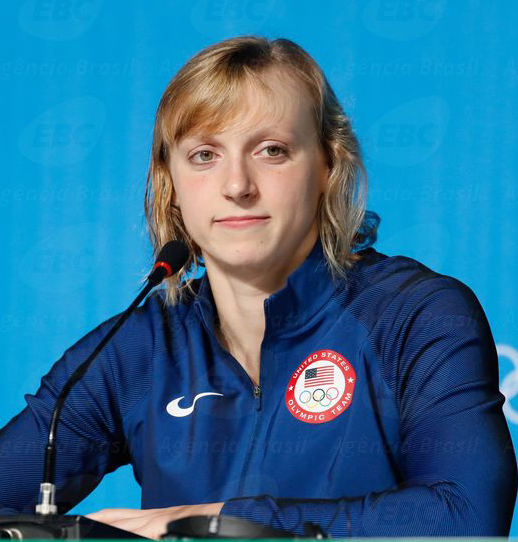
Katie Ledecky is pictured at an Olympic Park interview on 3 August 2016, before the swimming competition began. She subsequently won four gold medals and one silver, contributing to the leading American collection in the chart above. Her individual titles came in the 200, 400 and 800 metres freestyle, with another gold in the 4 × 200 metres relay. She also shared the silver in the 4 × 100 metres relay. These relay medals belong in her personal record but count only once nationally. The portrait connects the large American medal stack with one of the swimmers who helped build it.
Fernando Frazão/Agência Brasil; existing Commons crop · CC BY 3.0 BR
9. Gold medals against total medals
All 86 medal-winning delegations appear in this comparison. Total medals run along the horizontal axis and gold medals along the vertical axis. The United States is highest and furthest right, leading on both measures. Great Britain sits slightly above China because it won one more gold, while China lies further right because its overall collection was larger.
Germany and France illustrate a different relationship: they share a total of 42 medals but have different gold counts, so their points align vertically. Smaller delegations cluster near the origin, and some overlap because they finished with identical figures. The reference table provides the exact numbers when points are difficult to distinguish. Gold medals are included within total medals, so the two axes are related by definition; this is a comparison of collections rather than evidence of an independent statistical relationship. Delegations without a medal are outside the selection. No adjustment is made for population, team size, expenditure or the number of events entered.
Source: Olympedia, Rio 2016. Team and relay medals count once per delegation and event. Ties and subsequent medal revisions are retained; non-medal events are excluded.
10. Brazil’s medals by discipline
GoldSilverBronze
Brazil won nineteen medals at its home Games: seven golds, six silvers and six bronzes. Artistic gymnastics, canoe sprint and judo each supplied three podium finishes. Beach volleyball added two, while eight other disciplines contributed one apiece. The chart shows the seven gold-winning disciplines together with the other two disciplines that won multiple medals, combining the remaining single-medal disciplines into one final group.
Rafaela Silva supplied the judo gold, Thiago Braz won the pole vault, and Robson Conceição won a boxing title. Brazilian teams also won men’s football, men’s volleyball and men’s beach volleyball, while Martine Grael and Kahena Kunze won the women’s skiff sailing event. Team medals count once nationally, even when several athletes receive awards. This discipline breakdown is more detailed than the combined sport categories in the regional charts: beach volleyball and indoor volleyball, for example, remain separate. The metallic colours distinguish victories from silver and bronze finishes, and the stacked sums reconcile with Brazil’s row in the reference table.
Source: Olympedia, Rio 2016. Team and relay medals count once per delegation and event. Ties and subsequent medal revisions are retained; non-medal events are excluded. Host records: Brazil at Rio 2016.

Rafaela Silva displays the gold medal she won in the women’s 57 kilogram judo event on 8 August 2016. Her victory supplied the gold segment in Brazil’s judo bar above, alongside two bronze medals earned by other Brazilian judokas. It was one of seven Brazilian titles across the Games. The photograph connects the host delegation’s medal breakdown with a specific champion and weight class. Judo is included among other sports in the regional overview and reference table, but receives its own bar in the host comparison. Keeping those different levels of detail explicit helps the page’s totals remain consistent.
11. Selected champions: medal collections
GoldSilverBronze
Michael Phelps collected five golds and one silver in Rio. Katie Ledecky won four golds and one silver, while Simone Biles earned four golds and one bronze. Katinka Hosszú collected three golds and one silver. Usain Bolt and Jason Kenny each won three gold medals. The stacked bars compare selected champions from swimming, gymnastics, athletics and cycling.
These are personal credited collections, so team and relay medals belong in the athlete’s record. They must not be added together to reconstruct national results, because the same team victory can appear in several athletes’ collections. Ledecky combined three individual freestyle titles with a relay gold; Biles combined team success with three individual victories. Different sports provide different numbers of medal opportunities, making this an illustrative comparison rather than a universal measure of athletic ability. The selection is not an exhaustive ranking of every multiple medallist. Its purpose is to connect the regional and national totals with some of the people whose performances helped create them.
Source: Olympedia, Rio 2016. Team and relay medals count once per delegation and event. Ties and subsequent medal revisions are retained; non-medal events are excluded. Selected personal medal records.
12. Competition dates for four featured disciplines
Pool swimming ran from 6 to 13 August, while artistic gymnastics extended from 6 to 16 August. Road cycling took place from 6 to 10 August, followed by track cycling from 11 to 16 August. The ranges show how these programmes overlapped: the pool and gymnastics competitions began alongside the road races, while the velodrome programme occupied a later interval.
The horizontal axis gives the day of August 2016. Each bar joins the first and last competition dates without implying that events took place on every intervening day. This is a selected schedule rather than the complete Olympic calendar. Football began before the opening ceremony, and other competitions continued until 21 August. Marathon swimming is outside this pool-only timeline, although it is included in the earlier swimming medal chart. Rhythmic gymnastics, trampoline, mountain biking and BMX are also outside this four-discipline selection. A longer range does not necessarily mean more athletes, sessions or medals; it simply provides chronological context for the results.
Sources: Artistic gymnastics schedule, Pool swimming schedule, Marathon swimming schedule, Road cycling schedule, Track cycling schedule.
13. Rio 2016 medal reference table
All 86 medal-winning delegations. Scroll vertically and sideways to compare national totals and the six featured sports. Other sports contains the remaining programme. Gold and total-medal columns are separate measures and should not be added together.
| Delegation | Source code | Region | Gold | Silver | Bronze | Total medals | Athletics gold | Athletics medals | Wrestling gold | Wrestling medals | Swimming gold | Swimming medals | Gymnastics gold | Gymnastics medals | Cycling gold | Cycling medals | Boxing gold | Boxing medals | Other gold | Other medals | Results |
|---|---|---|---|---|---|---|---|---|---|---|---|---|---|---|---|---|---|---|---|---|---|
| United States | USA | North America | 46 | 37 | 38 | 121 | 13 | 32 | 2 | 3 | 16 | 33 | 4 | 12 | 2 | 5 | 1 | 3 | 8 | 33 | Olympedia results |
| Great Britain | GBR | Western Europe | 27 | 23 | 17 | 67 | 2 | 7 | 0 | 0 | 1 | 6 | 2 | 7 | 6 | 12 | 1 | 3 | 15 | 32 | Olympedia results |
| China | CHN | East Asia | 26 | 18 | 26 | 70 | 2 | 6 | 0 | 2 | 1 | 6 | 0 | 5 | 1 | 1 | 0 | 4 | 22 | 46 | Olympedia results |
| Russia | RUS | Eastern Europe / former USSR | 19 | 17 | 20 | 56 | 0 | 0 | 4 | 9 | 0 | 4 | 3 | 11 | 0 | 3 | 1 | 4 | 11 | 25 | Olympedia results |
| Germany | GER | Western Europe | 17 | 10 | 15 | 42 | 2 | 3 | 0 | 1 | 0 | 0 | 1 | 2 | 1 | 2 | 0 | 1 | 13 | 33 | Olympedia results |
| Japan | JPN | East Asia | 12 | 8 | 21 | 41 | 0 | 2 | 4 | 7 | 2 | 7 | 2 | 3 | 0 | 0 | 0 | 0 | 4 | 22 | Olympedia results |
| France | FRA | Western Europe | 10 | 18 | 14 | 42 | 0 | 6 | 0 | 0 | 0 | 3 | 0 | 0 | 0 | 1 | 2 | 6 | 8 | 26 | Olympedia results |
| South Korea | KOR | East Asia | 9 | 3 | 9 | 21 | 0 | 0 | 0 | 1 | 0 | 0 | 0 | 0 | 0 | 0 | 0 | 0 | 9 | 20 | Olympedia results |
| Italy | ITA | Western Europe | 8 | 12 | 8 | 28 | 0 | 0 | 0 | 1 | 1 | 4 | 0 | 0 | 1 | 2 | 0 | 0 | 6 | 21 | Olympedia results |
| Australia | AUS | Oceania | 8 | 11 | 10 | 29 | 0 | 2 | 0 | 0 | 3 | 10 | 0 | 0 | 0 | 2 | 0 | 0 | 5 | 15 | Olympedia results |
| Netherlands | NED | Western Europe | 8 | 7 | 4 | 19 | 0 | 1 | 0 | 0 | 2 | 2 | 1 | 1 | 2 | 6 | 0 | 1 | 3 | 8 | Olympedia results |
| Hungary | HUN | Eastern Europe / former USSR | 8 | 3 | 4 | 15 | 0 | 1 | 0 | 0 | 3 | 7 | 0 | 0 | 0 | 0 | 0 | 0 | 5 | 7 | Olympedia results |
| Brazil | BRA | Latin America / Caribbean | 7 | 6 | 6 | 19 | 1 | 1 | 0 | 0 | 0 | 1 | 0 | 3 | 0 | 0 | 1 | 1 | 5 | 13 | Olympedia results |
| Spain | ESP | Western Europe | 7 | 4 | 6 | 17 | 1 | 2 | 0 | 0 | 1 | 2 | 0 | 1 | 0 | 1 | 0 | 0 | 5 | 11 | Olympedia results |
| Kenya | KEN | Sub-Saharan Africa | 6 | 6 | 1 | 13 | 6 | 13 | 0 | 0 | 0 | 0 | 0 | 0 | 0 | 0 | 0 | 0 | 0 | 0 | Olympedia results |
| Jamaica | JAM | Latin America / Caribbean | 6 | 3 | 2 | 11 | 6 | 11 | 0 | 0 | 0 | 0 | 0 | 0 | 0 | 0 | 0 | 0 | 0 | 0 | Olympedia results |
| Croatia | CRO | Eastern Europe / former USSR | 5 | 3 | 2 | 10 | 2 | 3 | 0 | 0 | 0 | 0 | 0 | 0 | 0 | 0 | 0 | 1 | 3 | 6 | Olympedia results |
| Cuba | CUB | Latin America / Caribbean | 5 | 2 | 4 | 11 | 0 | 1 | 2 | 3 | 0 | 0 | 0 | 0 | 0 | 0 | 3 | 6 | 0 | 1 | Olympedia results |
| New Zealand | NZL | Oceania | 4 | 9 | 5 | 18 | 0 | 4 | 0 | 0 | 0 | 0 | 0 | 0 | 0 | 1 | 0 | 0 | 4 | 13 | Olympedia results |
| Canada | CAN | North America | 4 | 3 | 15 | 22 | 1 | 6 | 1 | 1 | 1 | 6 | 1 | 1 | 0 | 2 | 0 | 0 | 0 | 6 | Olympedia results |
| Uzbekistan | UZB | Eastern Europe / former USSR | 4 | 2 | 7 | 13 | 0 | 0 | 0 | 3 | 0 | 0 | 0 | 0 | 0 | 0 | 3 | 7 | 1 | 3 | Olympedia results |
| Colombia | COL | Latin America / Caribbean | 3 | 2 | 3 | 8 | 1 | 1 | 0 | 0 | 0 | 0 | 0 | 0 | 1 | 2 | 0 | 2 | 1 | 3 | Olympedia results |
| Switzerland | SUI | Western Europe | 3 | 2 | 2 | 7 | 0 | 0 | 0 | 0 | 0 | 0 | 0 | 1 | 2 | 2 | 0 | 0 | 1 | 4 | Olympedia results |
| Iran | IRI | Middle East / N. Africa | 3 | 1 | 4 | 8 | 0 | 0 | 1 | 5 | 0 | 0 | 0 | 0 | 0 | 0 | 0 | 0 | 2 | 3 | Olympedia results |
| Greece | GRE | Western Europe | 3 | 1 | 2 | 6 | 1 | 1 | 0 | 0 | 0 | 1 | 1 | 1 | 0 | 0 | 0 | 0 | 1 | 3 | Olympedia results |
| Argentina | ARG | Latin America / Caribbean | 3 | 1 | 0 | 4 | 0 | 0 | 0 | 0 | 0 | 0 | 0 | 0 | 0 | 0 | 0 | 0 | 3 | 4 | Olympedia results |
| Denmark | DEN | Western Europe | 2 | 6 | 7 | 15 | 0 | 1 | 0 | 1 | 1 | 2 | 0 | 0 | 0 | 3 | 0 | 0 | 1 | 8 | Olympedia results |
| Sweden | SWE | Western Europe | 2 | 6 | 3 | 11 | 0 | 0 | 0 | 2 | 1 | 3 | 0 | 0 | 1 | 2 | 0 | 0 | 0 | 4 | Olympedia results |
| South Africa | RSA | Sub-Saharan Africa | 2 | 6 | 2 | 10 | 2 | 4 | 0 | 0 | 0 | 3 | 0 | 0 | 0 | 0 | 0 | 0 | 0 | 3 | Olympedia results |
| Kazakhstan | KAZ | Eastern Europe / former USSR | 2 | 5 | 10 | 17 | 0 | 1 | 0 | 3 | 1 | 1 | 0 | 0 | 0 | 0 | 1 | 5 | 0 | 7 | Olympedia results |
| Ukraine | UKR | Eastern Europe / former USSR | 2 | 5 | 4 | 11 | 0 | 1 | 0 | 1 | 0 | 0 | 1 | 3 | 0 | 0 | 0 | 0 | 1 | 6 | Olympedia results |
| Serbia | SRB | Eastern Europe / former USSR | 2 | 4 | 2 | 8 | 0 | 1 | 1 | 1 | 0 | 0 | 0 | 0 | 0 | 0 | 0 | 0 | 1 | 6 | Olympedia results |
| Poland | POL | Eastern Europe / former USSR | 2 | 3 | 6 | 11 | 1 | 3 | 0 | 1 | 0 | 0 | 0 | 0 | 0 | 2 | 0 | 0 | 1 | 5 | Olympedia results |
| North Korea | PRK | East Asia | 2 | 3 | 2 | 7 | 0 | 0 | 0 | 0 | 0 | 0 | 1 | 1 | 0 | 0 | 0 | 0 | 1 | 6 | Olympedia results |
| Belgium | BEL | Western Europe | 2 | 2 | 2 | 6 | 1 | 1 | 0 | 0 | 0 | 1 | 0 | 0 | 1 | 2 | 0 | 0 | 0 | 2 | Olympedia results |
| Thailand | THA | Southeast Asia | 2 | 2 | 2 | 6 | 0 | 0 | 0 | 0 | 0 | 0 | 0 | 0 | 0 | 0 | 0 | 0 | 2 | 6 | Olympedia results |
| Slovakia | SVK | Eastern Europe / former USSR | 2 | 2 | 0 | 4 | 1 | 1 | 0 | 0 | 0 | 0 | 0 | 0 | 0 | 0 | 0 | 0 | 1 | 3 | Olympedia results |
| Georgia | GEO | Eastern Europe / former USSR | 2 | 1 | 4 | 7 | 0 | 0 | 1 | 3 | 0 | 0 | 0 | 0 | 0 | 0 | 0 | 0 | 1 | 4 | Olympedia results |
| Azerbaijan | AZE | Eastern Europe / former USSR | 1 | 7 | 10 | 18 | 0 | 0 | 0 | 9 | 0 | 0 | 0 | 0 | 0 | 0 | 0 | 2 | 1 | 7 | Olympedia results |
| Belarus | BLR | Eastern Europe / former USSR | 1 | 4 | 4 | 9 | 0 | 1 | 0 | 3 | 0 | 1 | 1 | 1 | 0 | 0 | 0 | 0 | 0 | 3 | Olympedia results |
| Turkey | TUR | Middle East / N. Africa | 1 | 3 | 4 | 8 | 0 | 1 | 1 | 5 | 0 | 0 | 0 | 0 | 0 | 0 | 0 | 0 | 0 | 2 | Olympedia results |
| Armenia | ARM | Eastern Europe / former USSR | 1 | 3 | 0 | 4 | 0 | 0 | 1 | 2 | 0 | 0 | 0 | 0 | 0 | 0 | 0 | 0 | 0 | 2 | Olympedia results |
| Czech Republic | CZE | Eastern Europe / former USSR | 1 | 2 | 7 | 10 | 0 | 1 | 0 | 0 | 0 | 0 | 0 | 0 | 0 | 1 | 0 | 0 | 1 | 8 | Olympedia results |
| Ethiopia | ETH | Sub-Saharan Africa | 1 | 2 | 5 | 8 | 1 | 8 | 0 | 0 | 0 | 0 | 0 | 0 | 0 | 0 | 0 | 0 | 0 | 0 | Olympedia results |
| Slovenia | SLO | Eastern Europe / former USSR | 1 | 2 | 1 | 4 | 0 | 0 | 0 | 0 | 0 | 0 | 0 | 0 | 0 | 0 | 0 | 0 | 1 | 4 | Olympedia results |
| Indonesia | INA | Southeast Asia | 1 | 2 | 0 | 3 | 0 | 0 | 0 | 0 | 0 | 0 | 0 | 0 | 0 | 0 | 0 | 0 | 1 | 3 | Olympedia results |
| Romania | ROU | Eastern Europe / former USSR | 1 | 1 | 2 | 4 | 0 | 0 | 0 | 1 | 0 | 0 | 0 | 0 | 0 | 0 | 0 | 0 | 1 | 3 | Olympedia results |
| Bahrain | BRN | Middle East / N. Africa | 1 | 1 | 0 | 2 | 1 | 2 | 0 | 0 | 0 | 0 | 0 | 0 | 0 | 0 | 0 | 0 | 0 | 0 | Olympedia results |
| Vietnam | VIE | Southeast Asia | 1 | 1 | 0 | 2 | 0 | 0 | 0 | 0 | 0 | 0 | 0 | 0 | 0 | 0 | 0 | 0 | 1 | 2 | Olympedia results |
| Chinese Taipei | TPE | East Asia | 1 | 0 | 2 | 3 | 0 | 0 | 0 | 0 | 0 | 0 | 0 | 0 | 0 | 0 | 0 | 0 | 1 | 3 | Olympedia results |
| Côte d'Ivoire | CIV | Sub-Saharan Africa | 1 | 0 | 1 | 2 | 0 | 0 | 0 | 0 | 0 | 0 | 0 | 0 | 0 | 0 | 0 | 0 | 1 | 2 | Olympedia results |
| Independent Olympic Athletes | IOA | Middle East / N. Africa | 1 | 0 | 1 | 2 | 0 | 0 | 0 | 0 | 0 | 0 | 0 | 0 | 0 | 0 | 0 | 0 | 1 | 2 | Olympedia results |
| The Bahamas | BAH | Latin America / Caribbean | 1 | 0 | 1 | 2 | 1 | 2 | 0 | 0 | 0 | 0 | 0 | 0 | 0 | 0 | 0 | 0 | 0 | 0 | Olympedia results |
| Fiji | FIJ | Oceania | 1 | 0 | 0 | 1 | 0 | 0 | 0 | 0 | 0 | 0 | 0 | 0 | 0 | 0 | 0 | 0 | 1 | 1 | Olympedia results |
| Jordan | JOR | Middle East / N. Africa | 1 | 0 | 0 | 1 | 0 | 0 | 0 | 0 | 0 | 0 | 0 | 0 | 0 | 0 | 0 | 0 | 1 | 1 | Olympedia results |
| Kosovo | KOS | Eastern Europe / former USSR | 1 | 0 | 0 | 1 | 0 | 0 | 0 | 0 | 0 | 0 | 0 | 0 | 0 | 0 | 0 | 0 | 1 | 1 | Olympedia results |
| Puerto Rico | PUR | Latin America / Caribbean | 1 | 0 | 0 | 1 | 0 | 0 | 0 | 0 | 0 | 0 | 0 | 0 | 0 | 0 | 0 | 0 | 1 | 1 | Olympedia results |
| Singapore | SGP | Southeast Asia | 1 | 0 | 0 | 1 | 0 | 0 | 0 | 0 | 1 | 1 | 0 | 0 | 0 | 0 | 0 | 0 | 0 | 0 | Olympedia results |
| Tajikistan | TJK | Eastern Europe / former USSR | 1 | 0 | 0 | 1 | 1 | 1 | 0 | 0 | 0 | 0 | 0 | 0 | 0 | 0 | 0 | 0 | 0 | 0 | Olympedia results |
| Malaysia | MAS | Southeast Asia | 0 | 4 | 1 | 5 | 0 | 0 | 0 | 0 | 0 | 0 | 0 | 0 | 0 | 1 | 0 | 0 | 0 | 4 | Olympedia results |
| Mexico | MEX | Latin America / Caribbean | 0 | 3 | 2 | 5 | 0 | 1 | 0 | 0 | 0 | 0 | 0 | 0 | 0 | 0 | 0 | 1 | 0 | 3 | Olympedia results |
| Venezuela | VEN | Latin America / Caribbean | 0 | 2 | 1 | 3 | 0 | 1 | 0 | 0 | 0 | 0 | 0 | 0 | 0 | 1 | 0 | 1 | 0 | 0 | Olympedia results |
| Algeria | ALG | Middle East / N. Africa | 0 | 2 | 0 | 2 | 0 | 2 | 0 | 0 | 0 | 0 | 0 | 0 | 0 | 0 | 0 | 0 | 0 | 0 | Olympedia results |
| Ireland | IRL | Western Europe | 0 | 2 | 0 | 2 | 0 | 0 | 0 | 0 | 0 | 0 | 0 | 0 | 0 | 0 | 0 | 0 | 0 | 2 | Olympedia results |
| Lithuania | LTU | Eastern Europe / former USSR | 0 | 1 | 3 | 4 | 0 | 0 | 0 | 0 | 0 | 0 | 0 | 0 | 0 | 0 | 0 | 0 | 0 | 4 | Olympedia results |
| Bulgaria | BUL | Eastern Europe / former USSR | 0 | 1 | 2 | 3 | 0 | 1 | 0 | 1 | 0 | 0 | 0 | 1 | 0 | 0 | 0 | 0 | 0 | 0 | Olympedia results |
| India | IND | South Asia | 0 | 1 | 1 | 2 | 0 | 0 | 0 | 1 | 0 | 0 | 0 | 0 | 0 | 0 | 0 | 0 | 0 | 1 | Olympedia results |
| Mongolia | MGL | East Asia | 0 | 1 | 1 | 2 | 0 | 0 | 0 | 0 | 0 | 0 | 0 | 0 | 0 | 0 | 0 | 1 | 0 | 1 | Olympedia results |
| Burundi | BDI | Sub-Saharan Africa | 0 | 1 | 0 | 1 | 0 | 1 | 0 | 0 | 0 | 0 | 0 | 0 | 0 | 0 | 0 | 0 | 0 | 0 | Olympedia results |
| Grenada | GRN | Latin America / Caribbean | 0 | 1 | 0 | 1 | 0 | 1 | 0 | 0 | 0 | 0 | 0 | 0 | 0 | 0 | 0 | 0 | 0 | 0 | Olympedia results |
| Niger | NIG | Sub-Saharan Africa | 0 | 1 | 0 | 1 | 0 | 0 | 0 | 0 | 0 | 0 | 0 | 0 | 0 | 0 | 0 | 0 | 0 | 1 | Olympedia results |
| Philippines | PHI | Southeast Asia | 0 | 1 | 0 | 1 | 0 | 0 | 0 | 0 | 0 | 0 | 0 | 0 | 0 | 0 | 0 | 0 | 0 | 1 | Olympedia results |
| Qatar | QAT | Middle East / N. Africa | 0 | 1 | 0 | 1 | 0 | 1 | 0 | 0 | 0 | 0 | 0 | 0 | 0 | 0 | 0 | 0 | 0 | 0 | Olympedia results |
| Norway | NOR | Western Europe | 0 | 0 | 4 | 4 | 0 | 0 | 0 | 1 | 0 | 0 | 0 | 0 | 0 | 0 | 0 | 0 | 0 | 3 | Olympedia results |
| Egypt | EGY | Middle East / N. Africa | 0 | 0 | 3 | 3 | 0 | 0 | 0 | 0 | 0 | 0 | 0 | 0 | 0 | 0 | 0 | 0 | 0 | 3 | Olympedia results |
| Tunisia | TUN | Middle East / N. Africa | 0 | 0 | 3 | 3 | 0 | 0 | 0 | 1 | 0 | 0 | 0 | 0 | 0 | 0 | 0 | 0 | 0 | 2 | Olympedia results |
| Israel | ISR | Middle East / N. Africa | 0 | 0 | 2 | 2 | 0 | 0 | 0 | 0 | 0 | 0 | 0 | 0 | 0 | 0 | 0 | 0 | 0 | 2 | Olympedia results |
| Austria | AUT | Western Europe | 0 | 0 | 1 | 1 | 0 | 0 | 0 | 0 | 0 | 0 | 0 | 0 | 0 | 0 | 0 | 0 | 0 | 1 | Olympedia results |
| Dominican Republic | DOM | Latin America / Caribbean | 0 | 0 | 1 | 1 | 0 | 0 | 0 | 0 | 0 | 0 | 0 | 0 | 0 | 0 | 0 | 0 | 0 | 1 | Olympedia results |
| Estonia | EST | Eastern Europe / former USSR | 0 | 0 | 1 | 1 | 0 | 0 | 0 | 0 | 0 | 0 | 0 | 0 | 0 | 0 | 0 | 0 | 0 | 1 | Olympedia results |
| Finland | FIN | Western Europe | 0 | 0 | 1 | 1 | 0 | 0 | 0 | 0 | 0 | 0 | 0 | 0 | 0 | 0 | 0 | 1 | 0 | 0 | Olympedia results |
| Morocco | MAR | Middle East / N. Africa | 0 | 0 | 1 | 1 | 0 | 0 | 0 | 0 | 0 | 0 | 0 | 0 | 0 | 0 | 0 | 1 | 0 | 0 | Olympedia results |
| Nigeria | NGR | Sub-Saharan Africa | 0 | 0 | 1 | 1 | 0 | 0 | 0 | 0 | 0 | 0 | 0 | 0 | 0 | 0 | 0 | 0 | 0 | 1 | Olympedia results |
| Portugal | POR | Western Europe | 0 | 0 | 1 | 1 | 0 | 0 | 0 | 0 | 0 | 0 | 0 | 0 | 0 | 0 | 0 | 0 | 0 | 1 | Olympedia results |
| Trinidad and Tobago | TTO | Latin America / Caribbean | 0 | 0 | 1 | 1 | 0 | 1 | 0 | 0 | 0 | 0 | 0 | 0 | 0 | 0 | 0 | 0 | 0 | 0 | Olympedia results |
| United Arab Emirates | UAE | Middle East / N. Africa | 0 | 0 | 1 | 1 | 0 | 0 | 0 | 0 | 0 | 0 | 0 | 0 | 0 | 0 | 0 | 0 | 0 | 1 | Olympedia results |
Other pages about Olympics
- Summer Olympic Medals
- Olympic 100 Metres
- Berlin 1936 Olympics
- Helsinki 1952 Olympics
- Mexico City 1968 Olympics
- Seoul 1988 Olympics
- Barcelona 1992 Olympics
- Atlanta 1996 Olympics
- Sydney 2000 Olympics
- Athens 2004 Olympics
- Beijing 2008 Olympics
- London 2012 Olympics
- British Olympians
- US Olympians
- Winter Olympics
Sources and image credits
Medal results follow Olympedia’s Rio edition and discipline tables. National totals are 306 gold, 307 silver and 359 bronze: 972 medal-table awards. Team medals count once per delegation and event. Personal athlete collections use individual credited medals and must not be added to the national totals. Regional assignments are editorial and appear in the reference table. Reviewed 16 October 2026.
- Rio 2016 overview and national medal table
- Athletics results and schedule
- Wrestling results and schedule
- Pool swimming results and schedule
- Marathon swimming results and schedule
- Artistic gymnastics results and schedule
- Rhythmic gymnastics results and schedule
- Trampolining results and schedule
- Track cycling results and schedule
- Road cycling results and schedule
- Mountain bike results and schedule
- BMX racing results and schedule
- Boxing results and schedule
- Brazil event results
The four Commons photographs are credited beside their images. The Biles and Ledecky images use existing Commons crops; no further edits were made. The banner retains the existing site image and crop.